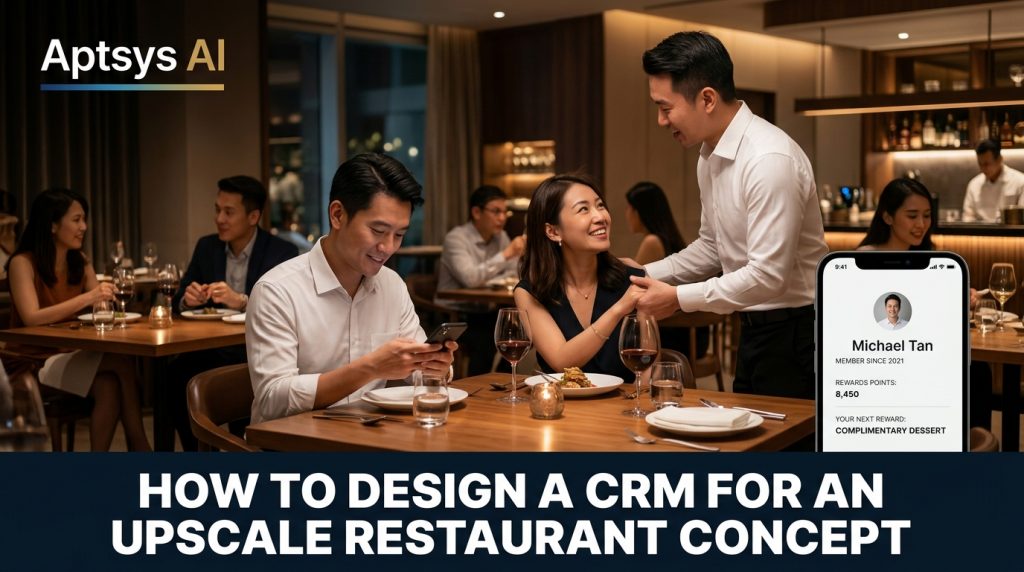
A CRM for an upscale restaurant in Singapore is not the same as one for a casual dining chain or a food court stall. The mechanics are different. The tone is different. What members expect in return is different. If you bolt a mass-market loyalty programme onto a fine dining or premium casual concept, it tends to cheapen the experience — which is the opposite of what you are trying to achieve.
Designing a CRM for an upscale concept means thinking about exclusivity, personalisation, and service — not points per dollar and discount vouchers. Here is how to approach it.
Why Standard Loyalty Programmes Don’t Fit Upscale Concepts
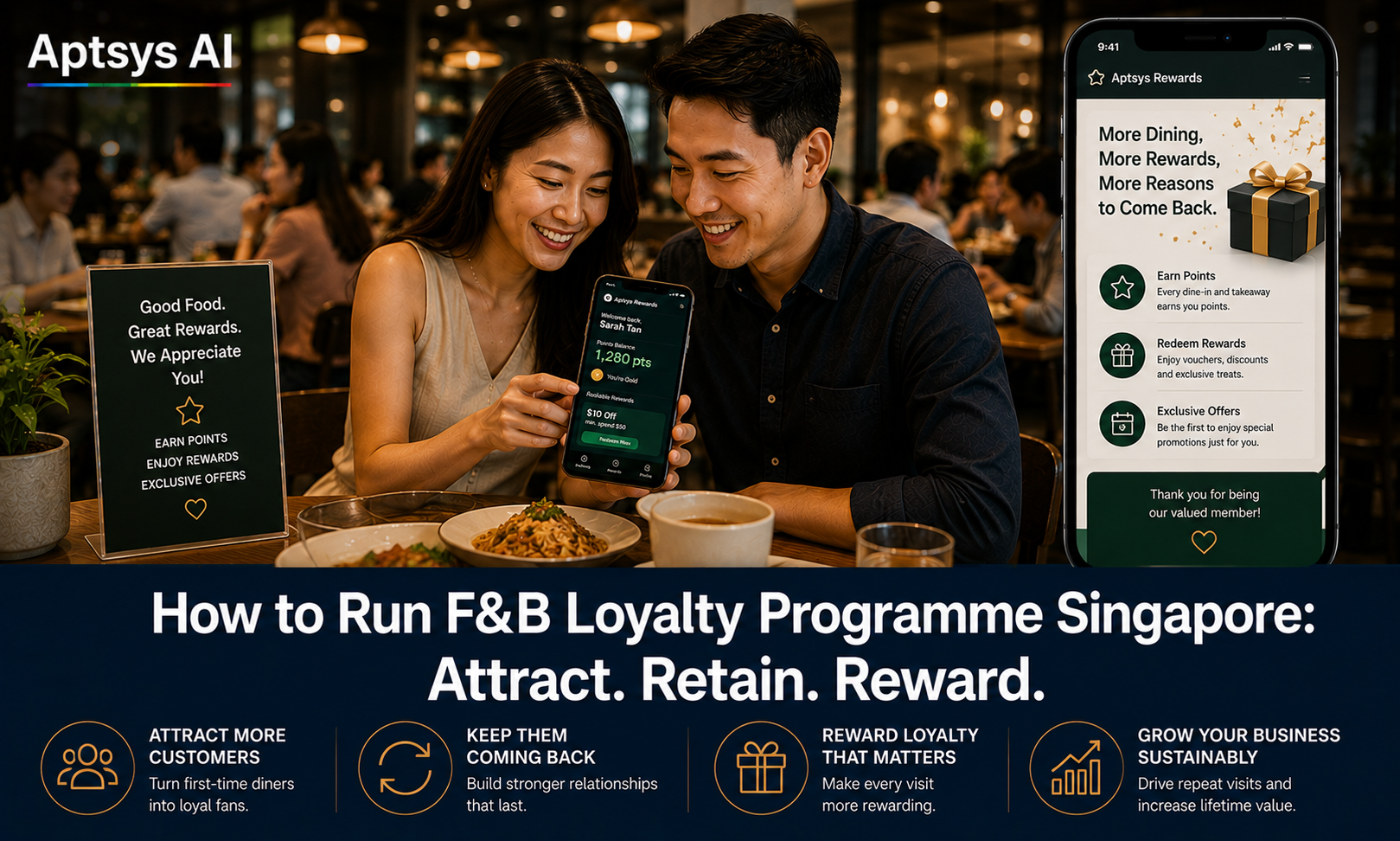
Most off-the-shelf loyalty programmes are built around one mechanic: spend money, earn points, redeem rewards. That works well when the key driver is price sensitivity. Your customer is thinking about value for money, and the programme reinforces that.
Upscale dining customers are not primarily motivated by price. They are paying a premium because they want an exceptional experience — the food, the ambience, the service, and increasingly, the feeling of being known and looked after. A points system that gives them a $5 voucher after ten visits signals the wrong thing entirely.
The starting point for an upscale CRM is this: what does membership mean at this restaurant? Answer that question before you configure anything.
What Membership Should Feel Like at a Premium Concept
At an upscale Singapore restaurant, membership should feel like a quiet privilege rather than a loyalty card programme. The signals are different.
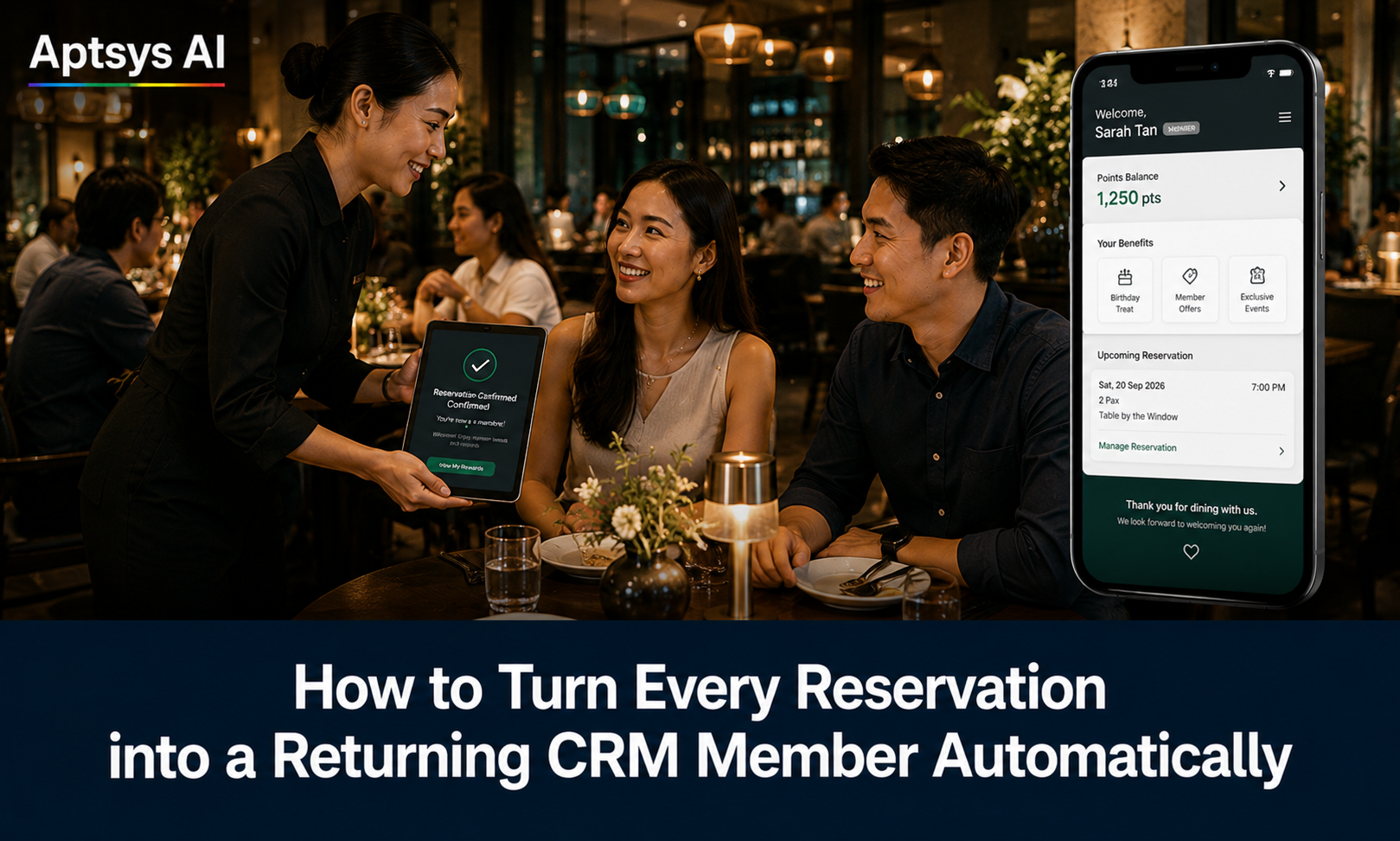
Recognition, not rewards. When a returning member walks in, your front-of-house team should know their name, their usual table preference, whether they have dietary restrictions, and whether they are celebrating something. That information lives in your CRM and needs to surface before service begins — not buried in a database that nobody checks.
Exclusive access, not discounts. Instead of offering percentage discounts that erode your margin and position, upscale CRM programmes work better with access-based benefits: priority reservation windows, invitations to chef’s table events, early access to a seasonal menu, or a private tasting before a new wine list launches. These things feel special. A 10% discount does not.
Thoughtful communication, not broadcast promotions. Members of an upscale programme should receive fewer messages, not more. Every communication should feel considered — a personal note before a birthday, a hand-picked recommendation based on their dining history, an invitation to something they specifically would enjoy. Mass promotions undermine the brand.
The Data You Need to Make It Work
Personalisation at this level requires clean, consistent data. Your CRM needs to capture and store:
- Dining frequency and last visit date
- Spend per visit and preferred spend range
- Dietary restrictions and allergies
- Table and seating preferences
- Special occasions (birthdays, anniversaries, milestones they have shared)
- Notes from previous visits — what they ordered, what they enjoyed, any feedback given
This data should be accessible to your front-of-house team before each service, not just visible in a back-office report. The value is in using it at the moment of service, not in the analysis afterwards.
Tiers That Reflect the Concept
If you use membership tiers, design them to reflect how your guests actually engage with the restaurant — not arbitrary spend thresholds that feel arbitrary to the member.
For example: a founding member tier for early supporters, a regular member tier for guests who dine monthly, and a preferred tier for guests who have an ongoing relationship with the team. The benefits at each level should be qualitative — better table priority, personal contact with the restaurant manager, first call for limited bookings — rather than purely transactional.
The CRM and Reservation System Must Be Connected
For an upscale concept, the most important integration is not CRM to POS — it is CRM to reservations. When a member books a table, your team should see their full profile before they arrive. If your reservation system and CRM are separate, that context gets lost. Staff are starting cold on every visit, and the personalisation you have invested in capturing never gets used.
In Singapore, where a growing number of upscale restaurants are using WhatsApp-based reservation tools, this connection matters even more. Every reservation should automatically pull the member record so the welcome is warm from the first message, not just at the table.
Stored Value: The Payment Experience That Feels Like Status
One reason upscale members dislike the end of a meal is the payment moment itself. The bill arrives, cards come out, someone taps or signs — it is transactional, and it breaks the mood. For a premium concept, that moment can undo a lot of what you built during the dining experience.
A stored value system removes it entirely.
When a member has credit loaded in their account, settling the bill becomes invisible. The POS deducts from their wallet. They receive a quiet notification — balance remaining, no fumbling with cards, no splitting, no waiting. It feels less like paying and more like the restaurant simply takes care of it because they are a valued member.
That sensation is familiar to anyone who has belonged to a private club. You dine, you sign, and the account is handled. Stored value brings the same feeling to a restaurant CRM — and for upscale guests who are accustomed to that level of service, it signals that you understand your customer.
There is a practical benefit on the operator side too. Members with stored value are pre-committed. Their credit is with you. They are more likely to return to use it, and they tend to spend with less hesitation when it is coming from a wallet they have already set aside for dining rather than from their live bank account.
Structurally, stored value can also serve as a tier differentiator. Founding members or top-tier members might hold a higher minimum balance with a better top-up bonus — reinforcing their status without resorting to points charts or percentage discounts. The fact that they carry a balance is itself a mark of belonging.
Getting the Balance Right
The goal is a CRM that makes members feel genuinely looked after without making the programme feel like a marketing machine. Less automation, more attentiveness. Fewer broadcasts, more personal touchpoints — and wherever possible, remove the friction that reminds guests they are transacting rather than simply being looked after. The technology should be invisible to the guest. What they experience is a restaurant that knows them, remembers them, and makes everything effortless.
Want to build a CRM that fits your restaurant’s positioning? See how Aptsys CRM works → or speak to the team.