Most Singapore restaurant owners think of their CRM as a loyalty points tracker. Points in, points out. Customers earn, customers redeem, and you hope they come back. It works — but stored value works better. If you have not added a stored value system to your CRM, you are leaving cash on the table and visits on the floor.
Here is why stored value is one of the most effective tools in a restaurant CRM, and how Singapore F&B operators are using it to generate upfront revenue and repeat visits at the same time.
What a Stored Value System Actually Is
A stored value system — sometimes called a prepaid wallet or top-up credit — lets your customers load money onto their membership account in advance. They top up $50 and get $55 in credit. Or they top up $100 and get $120. Every time they visit, they pay from that wallet instead of their card or cash.
It sounds simple. The mechanics underneath it are what make it powerful inside a CRM.
Why It Works: Cash Now, Visits Later
When a customer tops up their stored value, you receive the money before the visit happens. For a restaurant running on tight monthly cash flow, that matters. A busy Friday promotion that drives fifty $100 top-ups puts $5,000 in your account today — before a single plate leaves the kitchen.
Compare that to a points programme, where the value only flows after the customer earns enough to redeem. With stored value, the exchange happens upfront. You win immediately.
More importantly, that customer now has a reason to come back. Their money is with you. Psychologically, they have already committed. That pre-commitment is exactly what most loyalty programmes struggle to create.
The CRM Connection: This Is Where It Gets Useful
A stored value system on its own is a prepaid account. A stored value system inside a CRM is a relationship tool.
When your stored value is linked to your CRM, you know exactly who has a balance, how large it is, and how quickly they are spending it down. That data lets you do things a basic points system cannot.
Trigger a top-up nudge when the balance gets low. A customer with $8 left in their wallet gets an SMS or WhatsApp message: “Your balance is running low — top up $50 and get $55.” They do it because they already trust the system. Conversion rates on this kind of message are significantly higher than a generic promotional blast.
Identify your highest-value members. Customers who top up regularly and spend consistently are your real regulars, not just people who happen to have a loyalty card. Your CRM surfaces them. You can give them early access to a new menu item, a personal message on their birthday, or a private event invite. These customers are worth protecting.
Set top-up tiers to drive higher spend. Some Singapore restaurants offer a standard top-up bonus at $50 and a better one at $100 or $200. Members who see the $200 tier will often stretch to hit it — especially if the bonus is meaningful. Your CRM tracks where each member is and can send the right prompt at the right time.
A Format That Works Across F&B
Stored value suits almost any Singapore F&B format. Cafés use it to lock in morning regulars who might otherwise drift to the competition. Casual dining restaurants use it as a VIP membership perk. Food court stalls use it to eliminate the need to handle small cash transactions. Quick-service restaurants use it to speed up the counter line.
The common thread is that it works wherever repeat visits are the business model — which in F&B, is everywhere.
The Practical Setup Question
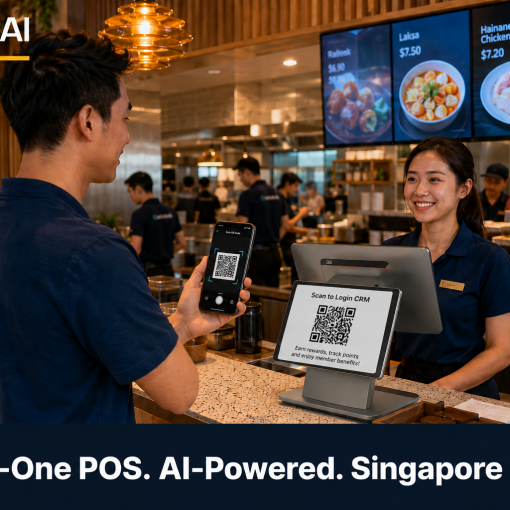
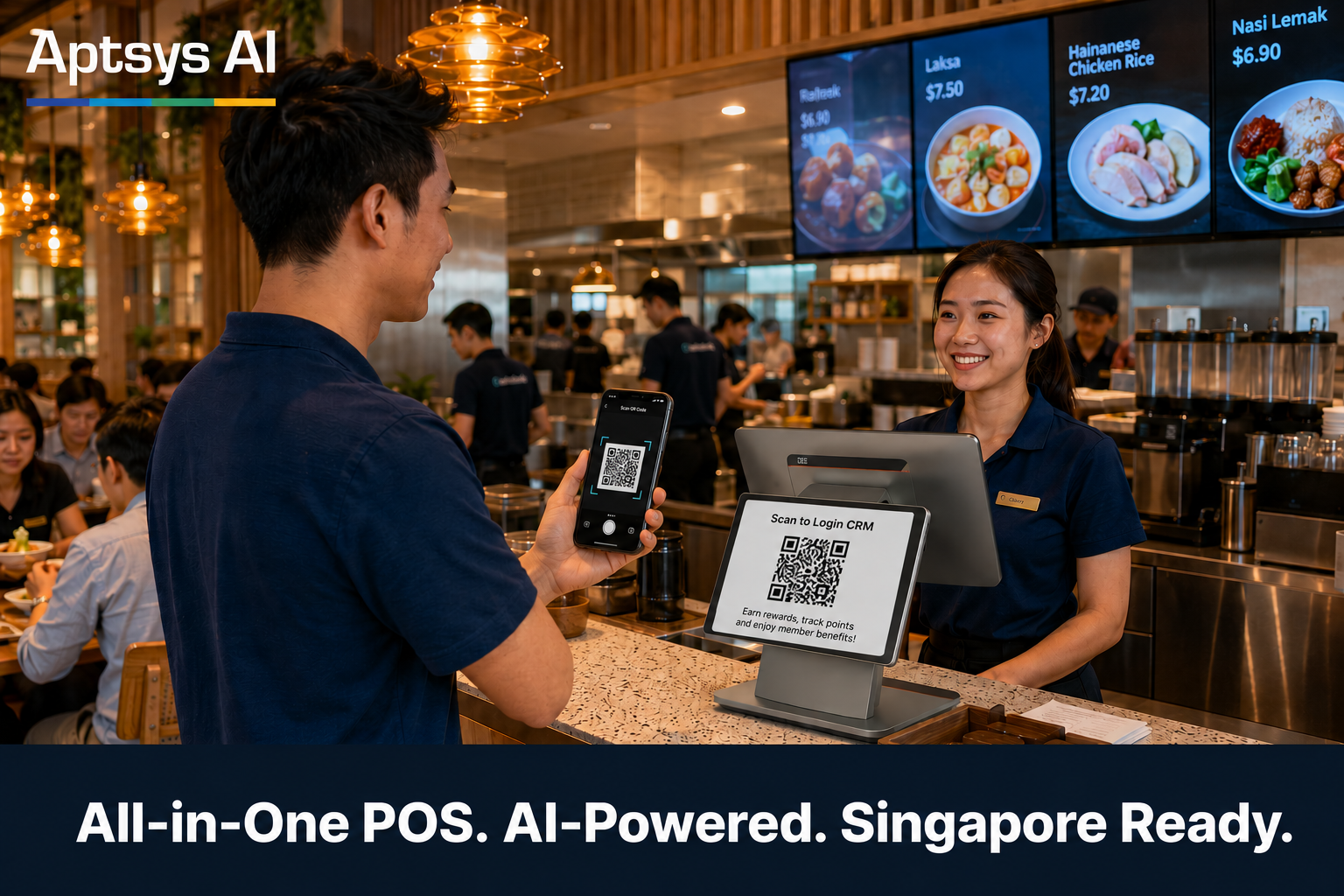
The main reason more Singapore restaurants have not adopted stored value is the integration headache. If your CRM does not talk to your POS, running a stored value system means your staff manually checking a spreadsheet or a separate app at the counter. That is slow, error-prone, and defeats the purpose.
For stored value to work operationally, your CRM and POS need to be the same system — or tightly connected. When a customer pays at the counter, the POS should deduct from their wallet automatically. When they top up online or via QR, the balance should update immediately. Receipts should show their remaining balance so they always know what is left.
That is the setup that actually drives repeat visits. Without it, stored value becomes an admin problem rather than a revenue tool.
Ready to add a stored value system to your restaurant CRM? See how Aptsys CRM works → or get in touch for a demo.