Running a restaurant in Singapore has always been labour-intensive. But the pressure to reduce manpower costs has never been higher. Wages are up. The foreign worker quota is tighter. And good F&B staff — the kind who show up reliably, learn fast, and stay past six months — are harder to find and harder to keep.
Technology won’t fix your hiring problem. But it can reduce how many people you need to run the same volume of covers, and free the staff you do have to focus on the parts of the job that actually require a human.
Here’s what that looks like in practice.
QR Ordering Reduces the Staff You Need on the Floor
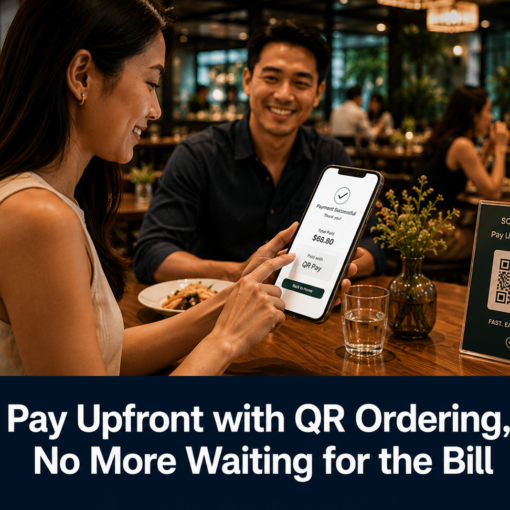
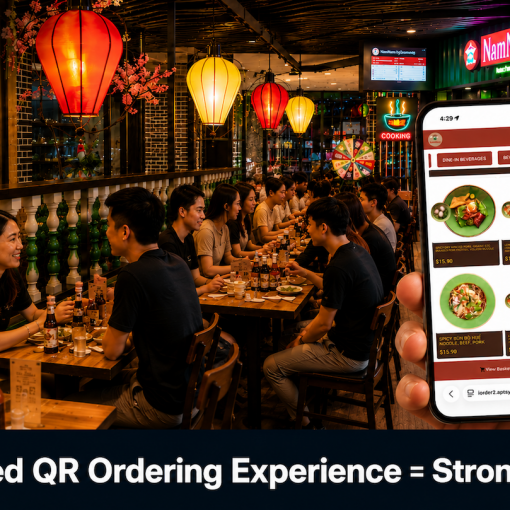
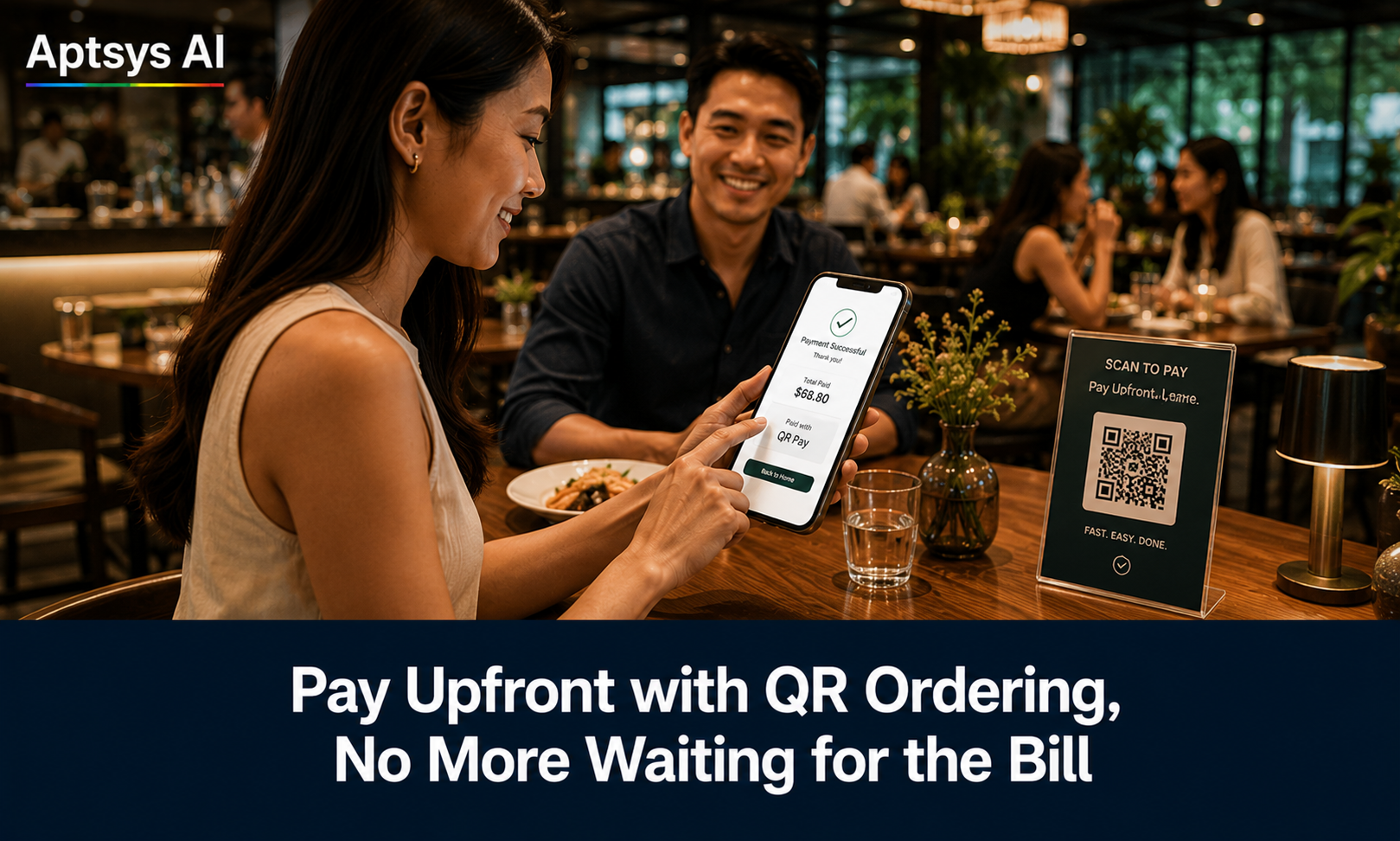
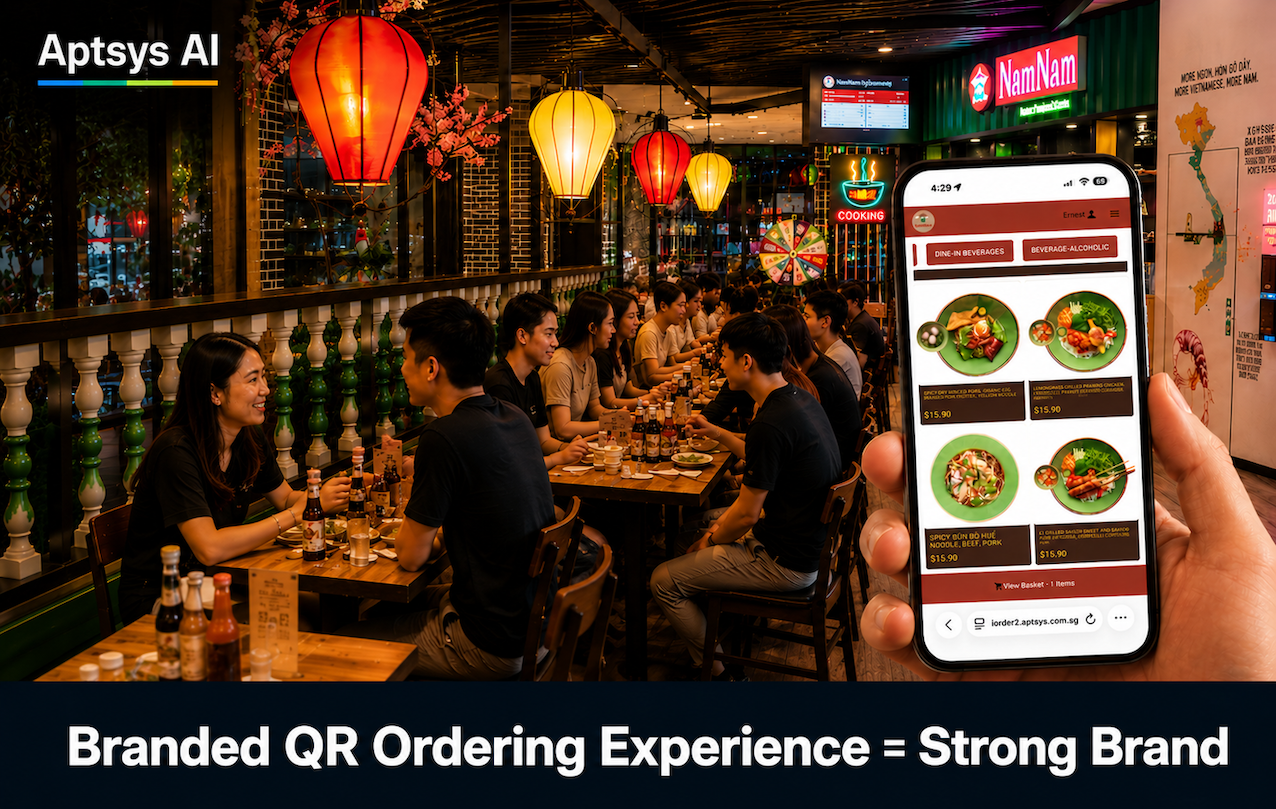
The most direct way to reduce manpower costs in a Singapore restaurant is to take order-taking off your staff’s plate entirely. With QR ordering, guests scan, browse, and order from their own phones. The order goes straight to the kitchen display. No one needs to walk to the table, no one needs to key it in, and no one needs to chase down a clarification on a modifer.
For a 40-seat restaurant running lunch and dinner, this typically means you can run service with one fewer floor staff per shift. Over a month, that adds up to real savings — without guests noticing any drop in service, because they’re not waiting for someone to come to them.
The staff you do have can focus on food delivery, table clearing, and the kind of attentive service that earns a five-star review.
Self-Service Kiosks Eliminate the Counter Cashier Function
If you run a QSR, food court stall, or fast-casual concept, the cashier position is your highest-volume, lowest-margin headcount. Every transaction goes through one person, creating a queue and a bottleneck.
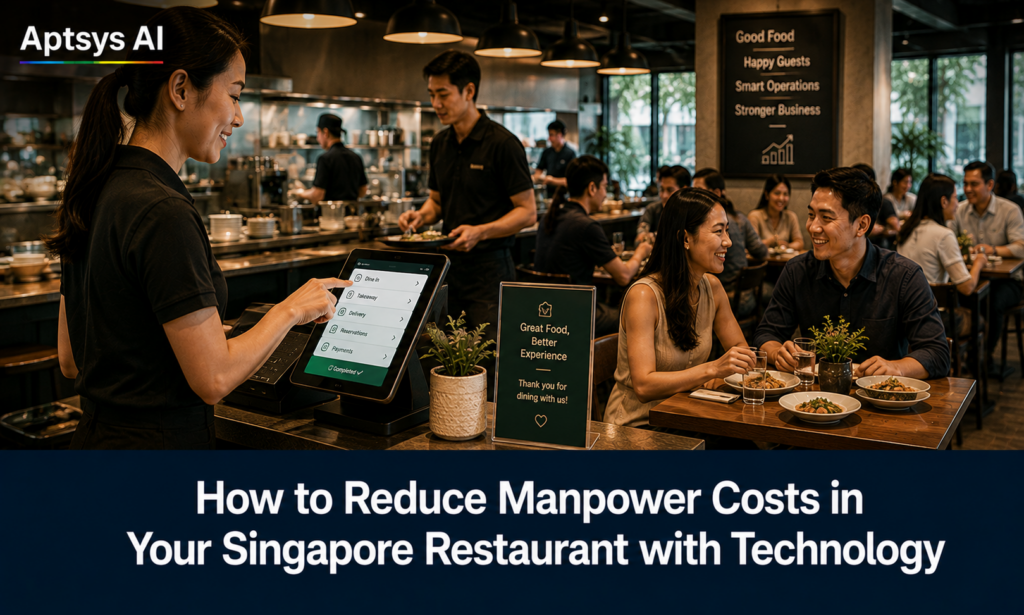
A self-service kiosk handles ordering and payment without a staff member present. Customers key in their own order, pay by card or QR, and move on. Your staff receive the order on the kitchen display and focus entirely on preparation.
Beyond headcount, kiosks consistently lift average order value because they upsell every customer without hesitation — suggesting add-ons, set upgrades, and bundle deals at the exact moment the customer is deciding. That revenue contribution partially offsets the kiosk cost on its own.
Bookwise Handles Reservations Without a Coordinator
Taking reservations sounds simple until you’re managing it yourself. Messages come in at 11pm. Guests want to negotiate the time. Someone books for eight and you need a deposit. Someone cancels with two hours’ notice.
Bookwise, Aptsys’s WhatsApp AI reservation tool, handles all of this automatically. It confirms bookings, collects deposits, sends reminders, and manages changes — without any staff involvement. Restaurants that previously had a part-time coordinator managing the inbox no longer need one. Those running reservations through the owner’s personal WhatsApp get their evenings back.
POS Automation Cuts Admin Time for Your Managers
Every hour your manager spends pulling reports, reconciling cash, or keying data into a spreadsheet is an hour not spent on the floor. A modern POS like Jade generates end-of-day summaries, sales breakdowns by item and time period, and staff performance reports automatically.
That is not a small saving. In a typical Singapore restaurant, managers spend two to four hours a week on reporting tasks that a well-configured POS can produce in seconds. Across a year, that’s more than 150 hours — the equivalent of nearly a month of manager time.
CRM Automation Replaces Manual Customer Follow-Up
Loyalty programmes, birthday messages, win-back campaigns, and member promotions are high-value activities. They bring customers back and increase lifetime spend. They also take time — time that most restaurant operators either don’t have or pay a part-time marketing person to handle.
An automated CRM sends the right message to the right customer at the right time, without anyone pressing send. A guest who hasn’t visited in 45 days gets a win-back offer. A member’s birthday triggers a voucher. A new sign-up gets a welcome message with their membership tier. All of this runs in the background while your team focuses on service.
The Honest Version
Technology reduces how many staff-hours you need for operational tasks. It does not replace the people who make your restaurant worth visiting. A table that feels looked after, a host who remembers a regular’s preference, a server who handles a complaint gracefully — none of that is automated.
What technology does is give you the option to run leaner on the operational side so your best people can spend their time where it actually matters.
If you want to see how QR ordering, kiosks, Bookwise, and Jade POS can reduce your manpower costs without reducing service quality, book a demo with Aptsys.