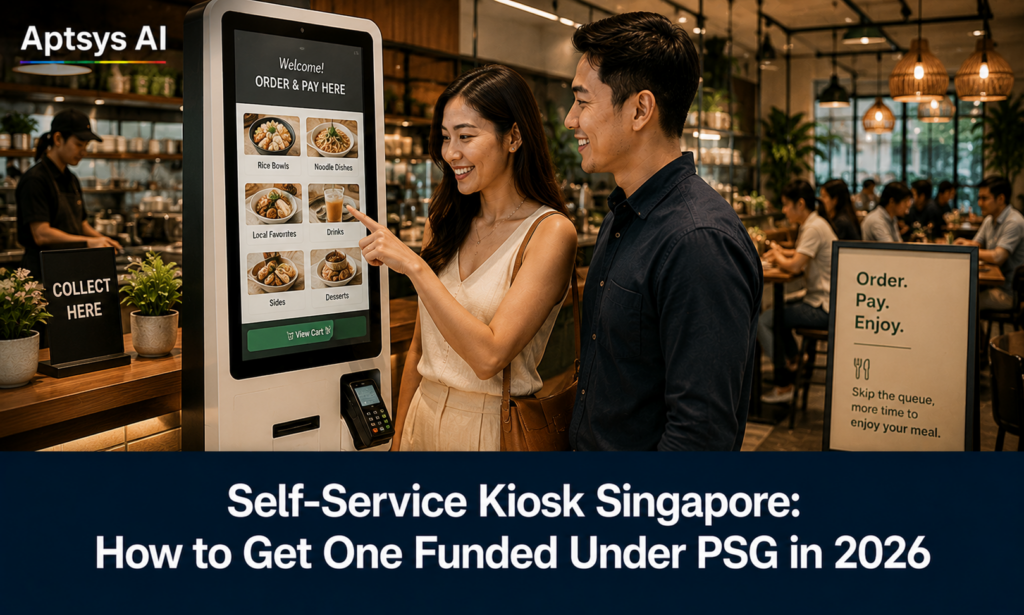
If you run a restaurant or retail outlet in Singapore and you’ve been watching your manpower costs climb, a self-service kiosk is probably already on your radar. The reason most operators haven’t moved is the upfront cost. A self-service kiosk PSG grant changes that calculation significantly — the government will cover up to 50% of your qualifying costs, and the application process is simpler than most owners expect.
Here is what you need to know.
What a Self-Service Kiosk Actually Does (F&B vs Retail)
The term “self-service kiosk” covers two distinct use cases in Singapore, and it is worth being clear about which one fits your operation.
For F&B: Self-Ordering
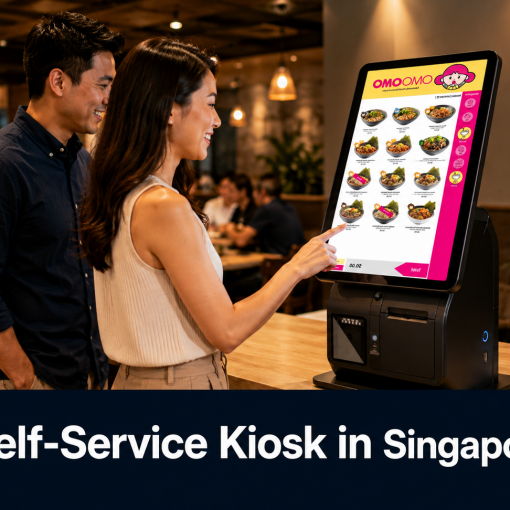
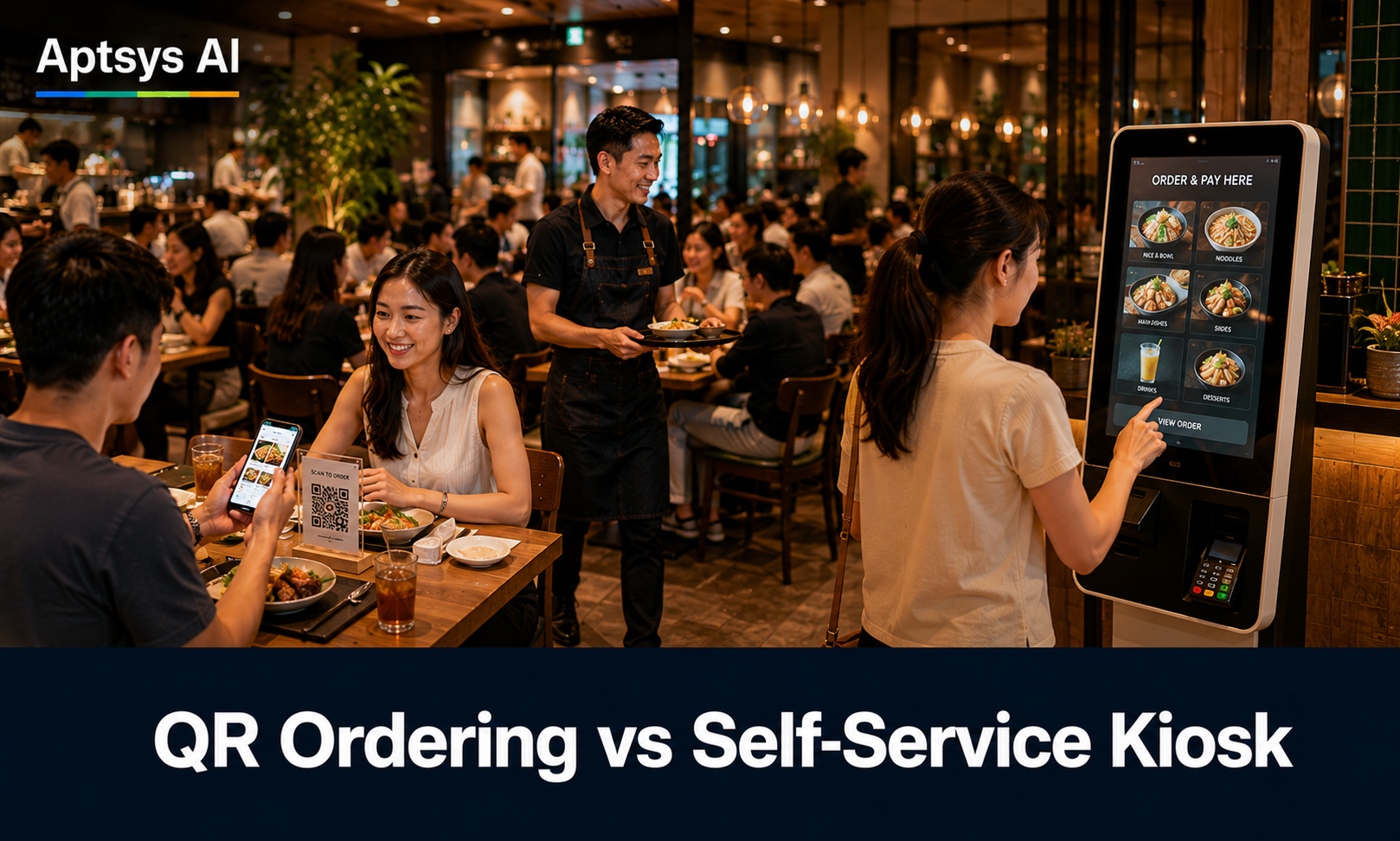
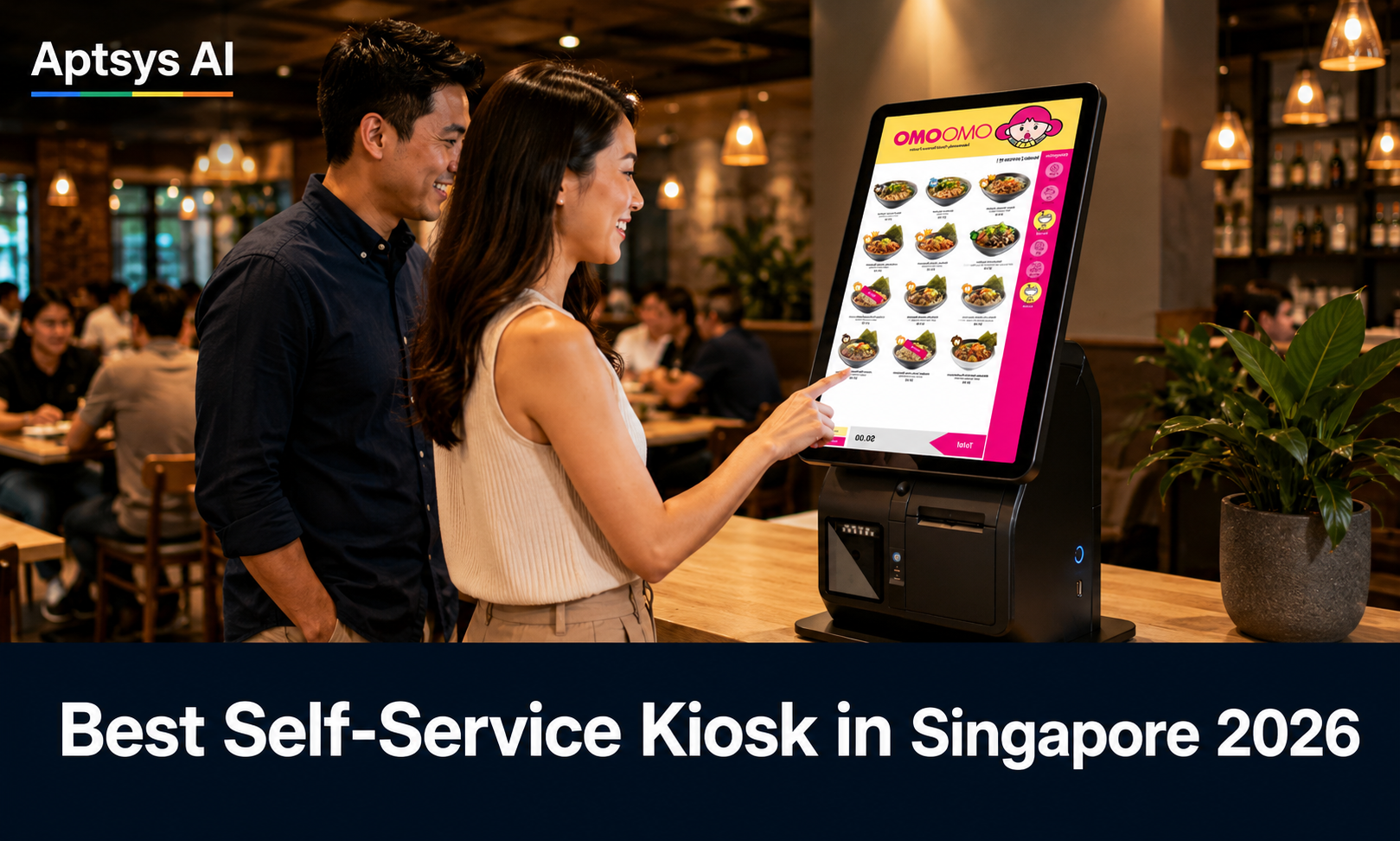
A self-ordering kiosk lets your customers browse your menu, customise their order, and pay — all without a cashier. In a quick-service or casual dining restaurant, this means your staff are no longer tied to the counter during peak hours. Orders go directly to the kitchen display, reducing miscommunication and ticket errors. Upsells — add-ons, set upgrades, desserts — are prompted automatically on screen, and they convert at a higher rate than when a tired cashier asks at the end of a long queue.
The practical result: you handle more covers during lunch and dinner rush without adding headcount. One Aptsys customer running a hawker-style concept cut counter staff at peak from three to one within the first month.
For Retail: Self-Checkout
A self-checkout kiosk lets shoppers scan their own items, apply any member discounts or stored-value balances, and pay — again without a cashier. For a retail store, this compresses queue times during peak hours and frees your floor staff to focus on assistance and stock. It also integrates directly with your CRM, so a member’s points are applied and recorded automatically at checkout, without manual entry.
Both configurations run on the same Aptsys platform, which means your sales data, inventory counts, and member records stay in one place — not spread across separate systems for your F&B and retail arms.
Why the PSG Grant Makes This the Right Time
The Productivity Solutions Grant (PSG) is an IMDA-backed scheme that subsidises technology adoption for eligible Singapore SMEs. Self-service kiosks are a qualifying solution category, which means the grant can fund up to 50% of your approved costs — hardware, software, and implementation included.
The key conditions to be eligible:
- Your business must be registered and operating in Singapore
- At least 30% local shareholding
- Annual turnover under S$100 million or fewer than 200 employees
- The solution must be purchased from a pre-approved vendor listed on the Business Grants Portal
Aptsys is an approved PSG vendor. That means you are not starting from scratch on the paperwork — the solution is already on the portal, the costs are pre-scoped, and we have walked through the application with operators across F&B and retail.
How the Application Works
The process has three steps, and most operators complete it in under two weeks.
Step 1: Get a quotation from an approved vendor. You need a formal quote from a PSG-listed vendor before you can submit your application. This is your starting document.
Step 2: Apply on the Business Grants Portal (BGP). Log in at businessgrants.gov.sg using your Corppass, select the PSG scheme, upload your vendor quotation, and submit. There is no complex business case required — the application form is straightforward.
Step 3: Wait for approval, then deploy. Approval typically comes within four to eight weeks. You implement after approval is confirmed, then claim reimbursement once the vendor invoice is paid.
You can also stack PSG with the SkillsFuture Enterprise Credit (SFEC), which provides an additional offset against qualifying costs. If your business has been contributing to mandatory CPF for at least three years, you likely qualify. We covered the full PSG and SFEC combination in an earlier post.
What to Do This Week
If you have been waiting for the right moment to look at a self-service kiosk for your Singapore restaurant or retail outlet, the combination of rising labour costs and the PSG subsidy makes this a straightforward decision to at least evaluate.
The most practical first step is to talk to an approved vendor, get a scoped quotation, and understand exactly what your net cost looks like after the grant. Most operators are surprised at how low the number is.
You can view the Aptsys self-ordering kiosk to see how it works for both F&B and retail, or visit our merchant information page to get in touch and request a quotation for your PSG application.