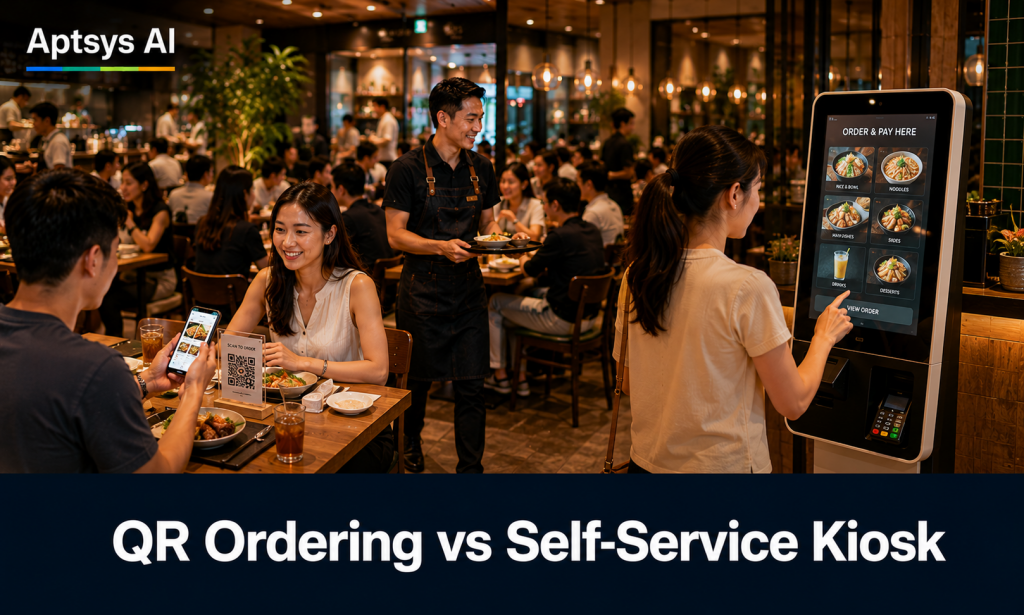
Technology has changed how Singapore restaurants take orders — and two options dominate the conversation right now: QR ordering and self-service kiosks. Both reduce reliance on floor staff and can meaningfully improve the dining experience. But they are not interchangeable. The right choice depends on your format, your customers, and how you want your restaurant to feel.
This guide breaks down QR ordering vs self-service kiosks for Singapore restaurants so you can make an informed decision — without the jargon.
What Is QR Ordering?
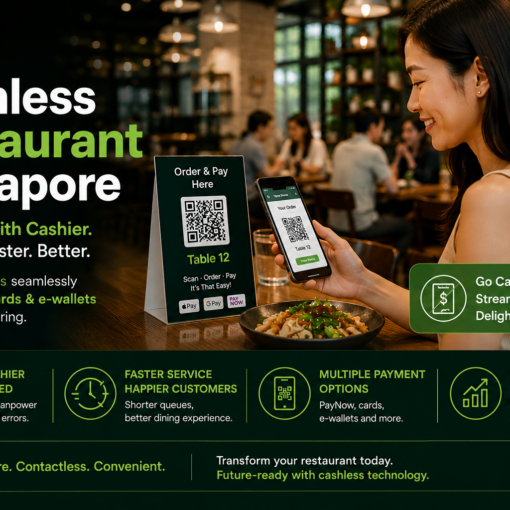
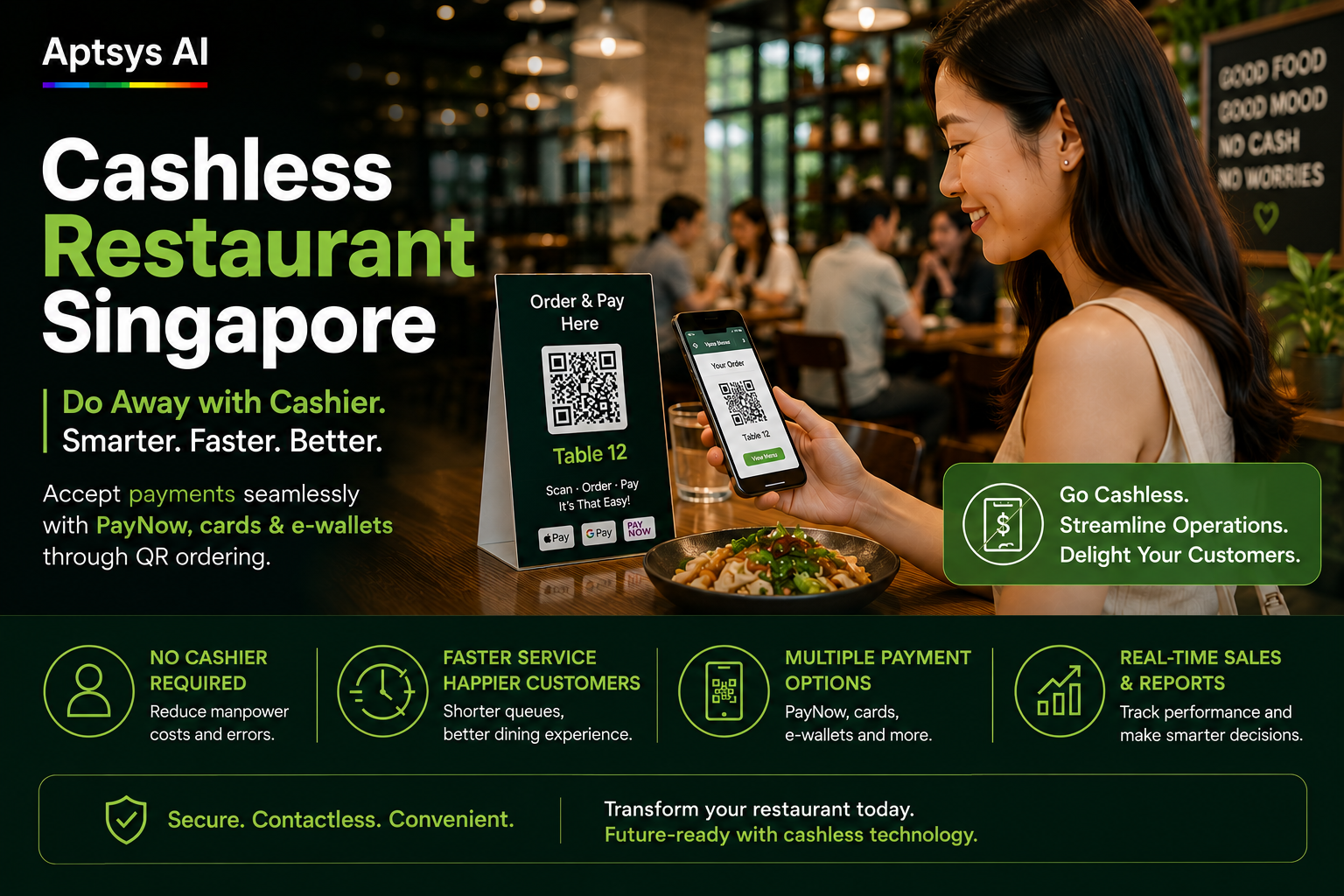
QR ordering lets customers scan a table-mounted QR code with their smartphone, browse your digital menu, and place orders directly — without flagging down a server. Payment can be completed in the same flow.
It works entirely through the customer’s own device, which means your hardware investment is minimal: just printed or acrylic QR code holders at each table.
Best suited for: Sit-down restaurants, cafés, and casual dining concepts where customers are already seated and spend time browsing.
What Is a Self-Service Kiosk?
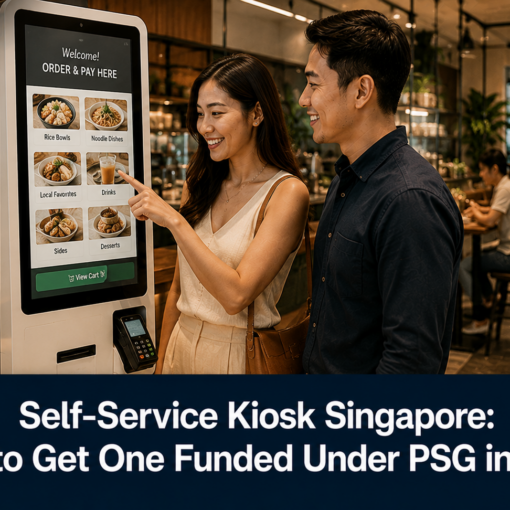
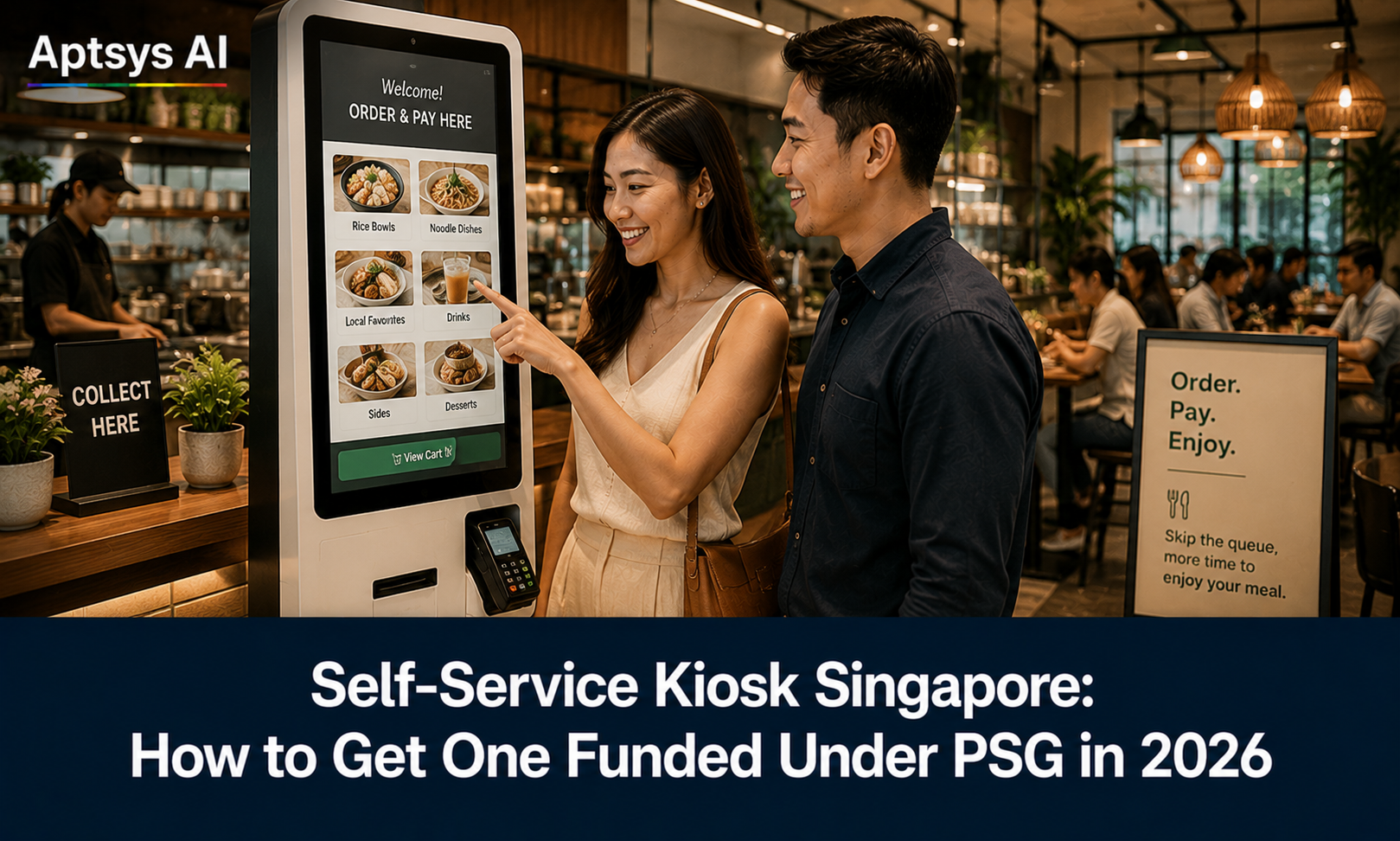
A self-service kiosk is a standalone touchscreen terminal — typically wall-mounted or on a stand near the entrance — where customers place and pay for their orders before sitting down or collecting their food.
Kiosks are hardware investments, but they come with powerful built-in advantages: prominent upsell prompts, add-on suggestions, and customisation options that are proven to lift average order values.
Best suited for: Quick-service restaurants (QSR), fast-casual concepts, food courts, and any format where customers order at the counter before receiving their food.
QR Ordering vs Kiosk: A Direct Comparison
| QR Ordering | Self-Service Kiosk | |
|---|---|---|
| Upfront cost | Low (minimal hardware) | Higher (kiosk unit + installation) |
| Setup time | Fast — typically days | Longer — hardware delivery and setup |
| Best format | Table-service, café, casual dining | QSR, fast-casual, food courts |
| Customer device | Customer’s own phone | Dedicated kiosk screen |
| Queue reduction | Moderate | High |
| Upsell capability | Good | Excellent |
| Manpower savings | Moderate (floor staff) | High (counter staff) |
| PSG eligible | Yes | Yes |
When QR Ordering Makes More Sense
QR ordering shines when your restaurant model centres on the table experience. If customers sit down, take their time, and order in rounds — drinks first, then mains, then dessert — QR ordering supports that flow naturally. It also works well for:
- Hawker stalls or food courts where table space is limited and hardware would be impractical
- Smaller F&B operations looking to digitise quickly without a large capital outlay
- Concepts with frequently changing menus where a digital menu is easier to update than printed materials
The trade-off: QR ordering depends on your customers being comfortable using their smartphones. Older demographics or tourists unfamiliar with the format may need staff assistance, which partially offsets the manpower savings.
When a Kiosk Makes More Sense
If you run a QSR, fast-casual, or any counter-service format, a kiosk is almost always the stronger investment. Here’s why:
- Queue management: Multiple kiosks can process several orders simultaneously, eliminating counter bottlenecks during peak hours.
- Upselling: Kiosk screens can prompt “Would you like to add a drink?” or “Upgrade to a set meal?” at exactly the right moment. Studies consistently show kiosk-driven upsell increases average order value by 10–30%.
- Accuracy: Customers input their own orders, reducing miscommunication between staff and kitchen.
- Labour reallocation: Counter staff can be redeployed to food prep, delivery, or quality control — tasks that are harder to automate.
For Singapore restaurants facing tight labour markets and rising manpower costs, kiosks offer the most direct path to sustainable unit economics.
Can You Use Both?
Yes — and many restaurants do. A common setup pairs QR ordering at tables with a kiosk near the entrance for walk-in or takeaway orders. This gives you full coverage across dine-in and counter-service flows without asking staff to manage either.
Both solutions are also PSG-eligible, so you may be able to subsidise the cost of implementing one or both through the Productivity Solutions Grant.
The Bottom Line
Choose QR ordering if you run a sit-down or table-service concept and want a low-cost, fast way to reduce floor staff workload.
Choose a kiosk if you run a counter-service or QSR format and want to eliminate queues, boost average order value, and free up counter staff.
Not sure which fits your restaurant? Talk to the Aptsys team — we’ll help you find the right setup for your format and budget.
Meta description: QR ordering vs self-service kiosk — which is right for your Singapore restaurant? Compare costs, formats, and upsell capability to make the right call.