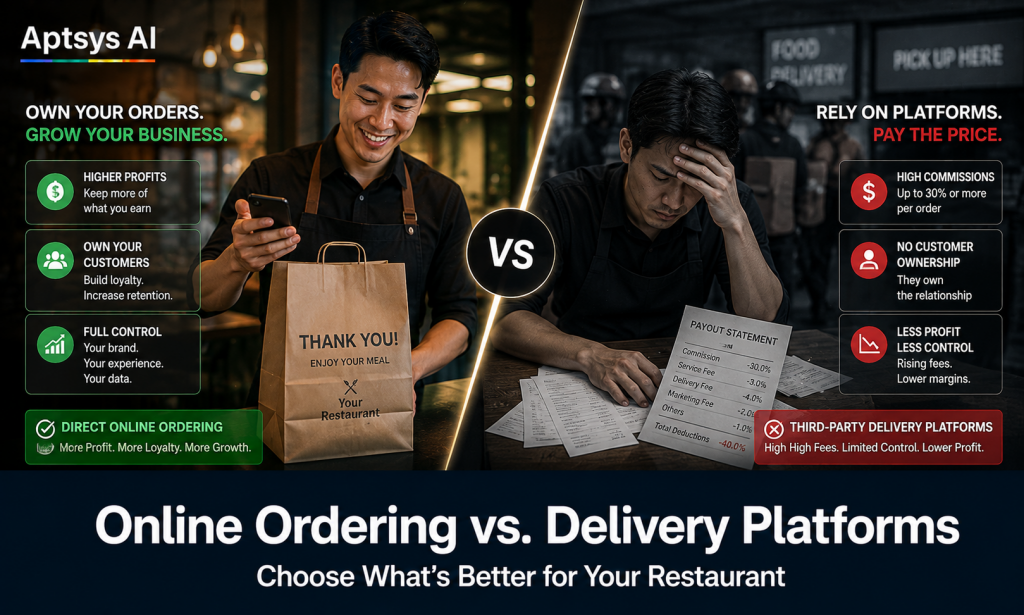
If you’re a Singapore restaurant operator trying to grow your off-premise revenue, you’re facing a version of the same decision: do you list on GrabFood, foodpanda or Deliveroo, or do you build your own online ordering channel? And if you’re already on a delivery platform, do you actually need your own ordering system on top of it?
The short answer is that they solve different problems — and the operators making the most of both understand which one does what.
What Delivery Platforms Actually Give You
GrabFood, foodpanda, and Deliveroo are marketing platforms first and delivery logistics second. When you list on them, you’re buying access to a large pool of customers who are already in the app, already browsing, and already in the habit of ordering food on their phone.
For a new restaurant, or one looking to reach customers outside its immediate neighbourhood, that exposure has real value. You don’t need to build an audience or drive traffic to a website. You appear in front of hungry customers who might never have heard of you.
The delivery infrastructure is also a genuine benefit for operators who don’t want to manage their own riders. The platforms handle logistics, insurance, and customer service for deliveries. That’s overhead you don’t carry.
The cost is the commission. Delivery platform fees in Singapore typically run between 25% and 30% of each order value. At those rates, a $20 meal nets you $14 to $15 before food cost, labour, and packaging. For most F&B operators, delivery platform orders are lower-margin or break-even — worth running for volume and visibility, but not where you build a profitable business.
What Your Own Online Ordering Channel Gives You
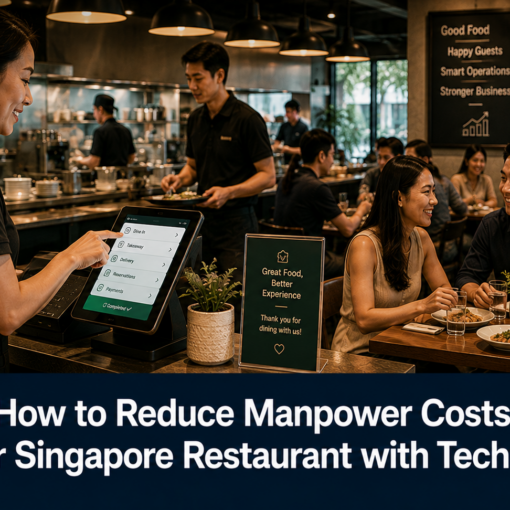
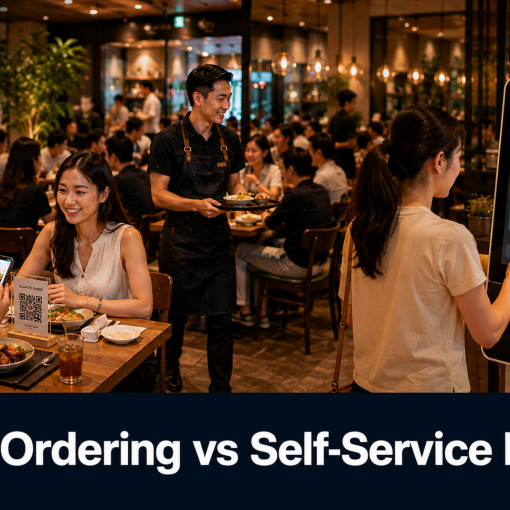
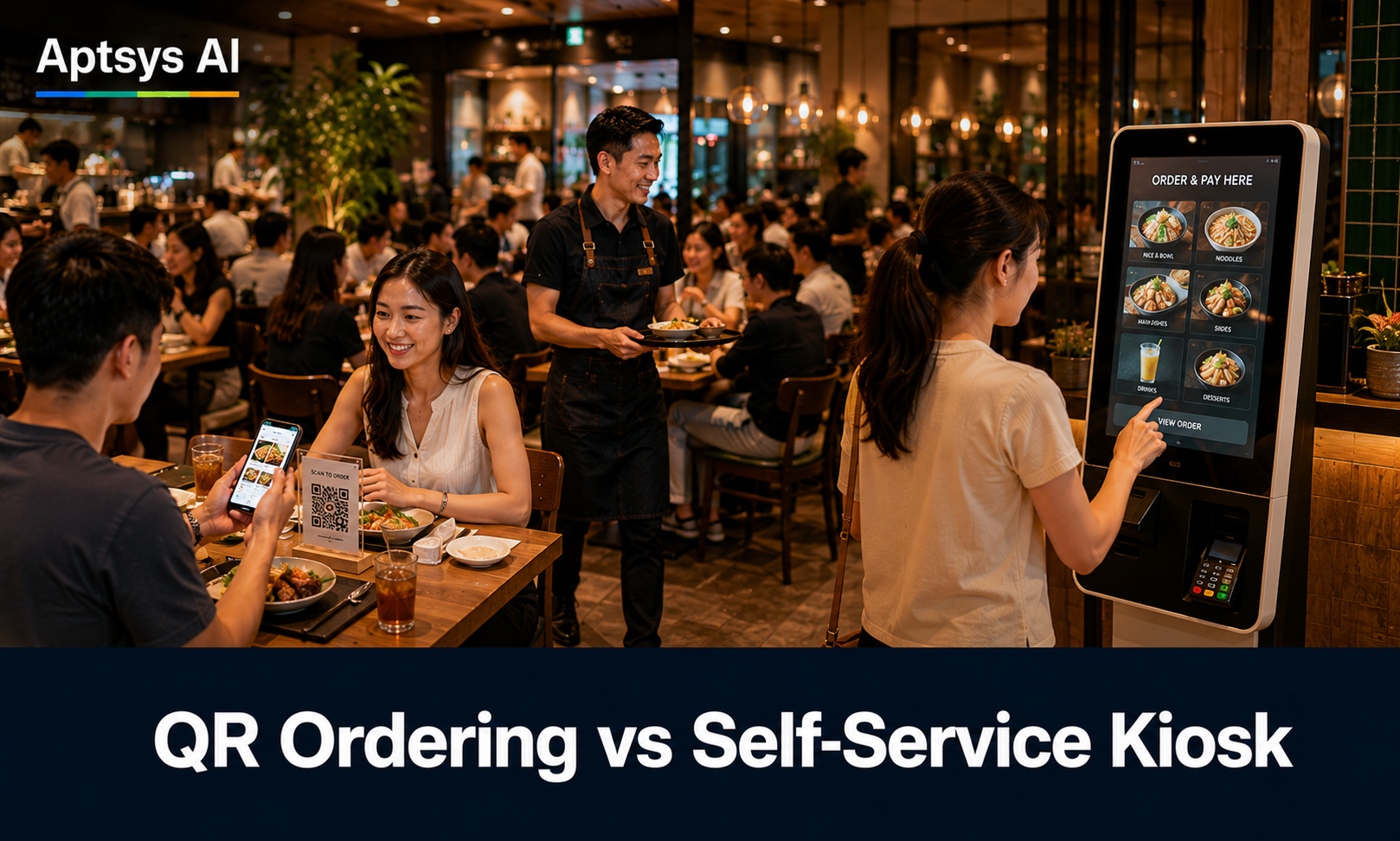
Your own online ordering system — whether that’s a QR-based order-and-pay at table, a branded order link you share with customers, or a pickup/delivery ordering page on your website — keeps the full margin on every transaction.
No commission. No platform fee. The customer pays you directly.
The second advantage is data ownership. Every customer who orders through your own channel is a customer you know — their contact details, their order history, their visit frequency. That data feeds directly into your CRM and loyalty programme. You can reach them again, target them with the right offer at the right time, and track whether they return.
On a delivery platform, you see aggregate order data but you don’t own the customer relationship. The platform does. If they decide to surface a competitor more prominently, or increase their commission structure, your position changes and you have no leverage.
The third advantage is control over the customer experience. On GrabFood or foodpanda, your menu, photos, and presentation are constrained by the platform’s interface. With your own ordering channel, you control what customers see, how items are presented, and what upsells or add-ons appear at checkout.
The Decision Framework
These two channels are not mutually exclusive — and the most effective approach for most Singapore restaurants isn’t to choose one over the other.
Use delivery platforms for customer acquisition. They’re expensive per order, but they put your restaurant in front of people who don’t know you yet. Accept that margin will be thinner on these orders and treat the platform as a marketing cost, not a core revenue channel.
Use your own online ordering channel for retention. When a customer orders from you on GrabFood and you capture their contact through your loyalty programme or follow-up, your goal is to migrate their next order onto your own channel — where you keep the full margin and continue building the customer relationship.
Over time, your delivery platform channel should be generating new customers. Your own ordering channel should be converting those customers into regulars who order direct.
What to Watch Out For
The most common mistake Singapore restaurants make is becoming over-reliant on delivery platforms and never building a direct customer base. Revenue looks healthy while commission costs quietly erode margin. When the platform changes its algorithm or fee structure, there’s no owned channel to fall back on.
The second mistake is building an online ordering channel that’s hard to find or clunky to use. If your order link is buried on your website and the checkout process requires an account sign-up, customers will default back to the platform they already know. Your own ordering channel needs to be as easy to use as GrabFood — ideally easier, because your customers already trust you.
The tools to set this up are not complicated. A good QR ordering system doubles as your dine-in and takeaway/delivery channel, captures customer data at every transaction, and integrates with your POS so you’re not managing two separate systems.
See how Aptsys QR ordering works for dine-in and takeaway — aptsys.com.sg/aptsys-solutions/qr-ordering/ or speak to our team at aptsys.com.sg/merchant-information/.