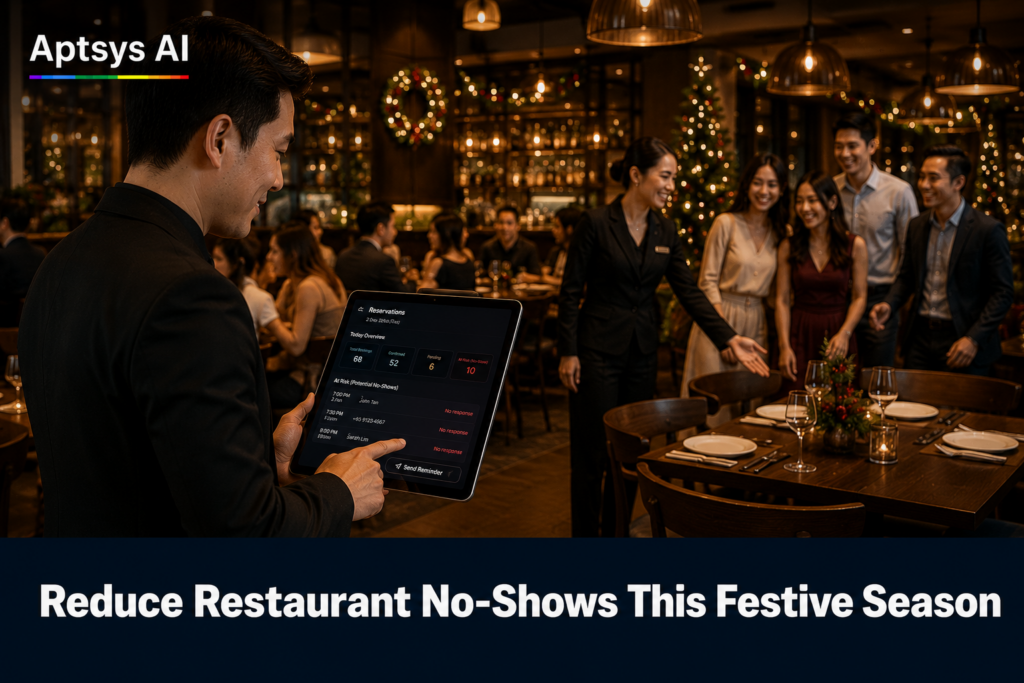
It’s 7.30pm on the Friday before Christmas. You turned away three walk-in groups because the book was full, and now two tables of six are sitting empty. Nobody called to cancel.
If you want to reduce restaurant no-shows in Singapore, November and December are when it matters most. These are your highest-value nights, and one empty table costs more than at any other time of year.
We’ve covered handling overbooking and managing large group bookings. This post is about what happens after the booking is made: making sure the guest actually turns up.
Why Restaurant No-Shows Spike in Singapore’s Festive Season
Diners don’t plan to waste your table. But in December, three things happen at once:
- People book more than one place. A team organiser holds two restaurants while waiting for the boss to decide, then forgets to cancel the other.
- Plans change fast. Company dinners get moved, headcounts drop, a family gathering shifts to someone’s home.
- Cancelling is a hassle. If cancelling means calling during your dinner rush, many guests simply don’t.
Most no-shows aren’t rude. They’re just friction. Remove it and you reduce restaurant no-shows without being harsh on guests.
What a Festive No-Show Actually Costs
Take a table of six at an average spend of $60 a head. That’s $360 lost the moment they don’t turn up. Add the walk-in you turned away for that slot and it’s closer to $720.
Two no-shows a night across eight peak December nights adds up to more than $5,000 gone in a month. (Illustrative. Use your own average spend.)
Six Ways to Reduce Restaurant No-Shows in Singapore
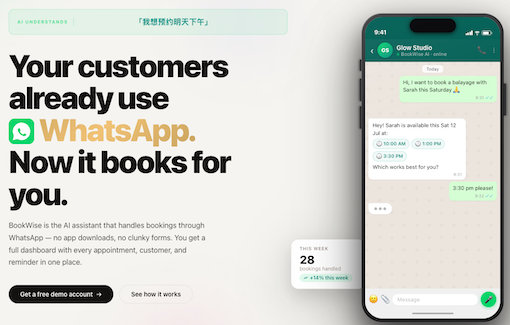
1. Confirm on WhatsApp, not email. Singapore diners read WhatsApp in seconds; email confirmations go unread. A booking confirmed in the chat the guest already uses feels real.
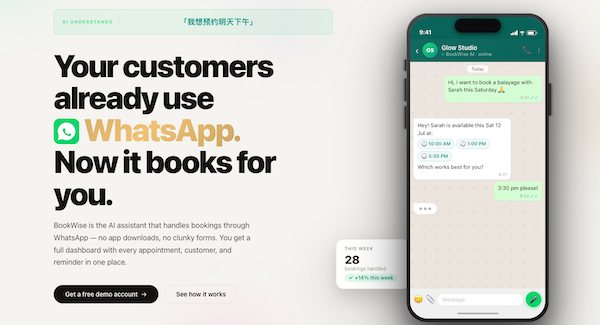
2. Send automatic reminders. A reminder before the booking, with a simple “confirm or reschedule” option, catches changed plans while you can still fill the table. Bookwise sends WhatsApp reminders before every booking, and guests confirm or reschedule without staff lifting a finger.
3. Make cancelling easy. This sounds backwards, but it works. A guest who can cancel with one WhatsApp reply at 3pm gives you four hours to rebook the table. A guest who has to call just doesn’t show up.
4. Reply instantly, even after closing. Many festive bookings come in at 11pm. If nobody replies until morning, the guest books elsewhere — and sometimes keeps both bookings. An AI that answers 24/7 locks in the booking while the guest is still deciding.
5. Set clear rules for peak nights. For large groups or Christmas Eve and NYE, consider a deposit or a confirmed headcount 48 hours ahead. Tell guests the policy upfront in the booking chat so nobody’s surprised.
6. Keep a list of repeat no-shows. If the same number has no-showed twice, you can decide whether to ask for a deposit next time. When reservations flow into your CRM, that history is there when you need it.
How Automated Reservations Reduce No-Shows Without Extra Staff
In December, nobody on your team has time to call every booking to confirm. Automating the routine parts is what makes all six steps workable.
With Bookwise:
- Guests book on WhatsApp in English, Chinese or Malay. Singlish is fine: “Fri 7pm 6 pax can?” works.
- Reminders go out automatically, and guests confirm or reschedule in the same chat.
- Every booking and conversation shows in one dashboard, on your phone or desktop.
- Anything the AI can’t handle gets flagged for your team, so no message is left unanswered.
Your staff stop chasing confirmations and focus on the guests who are actually in the room.
Start Reducing No-Shows Before December Fills Up
The best time to reduce restaurant no-shows is before your festive book is full. Most businesses are live on Bookwise within a day, so there’s still time before the December peak.
Ready to protect your busiest nights? Get a free Bookwise demo and see how automated WhatsApp reservations and reminders work for your restaurant.