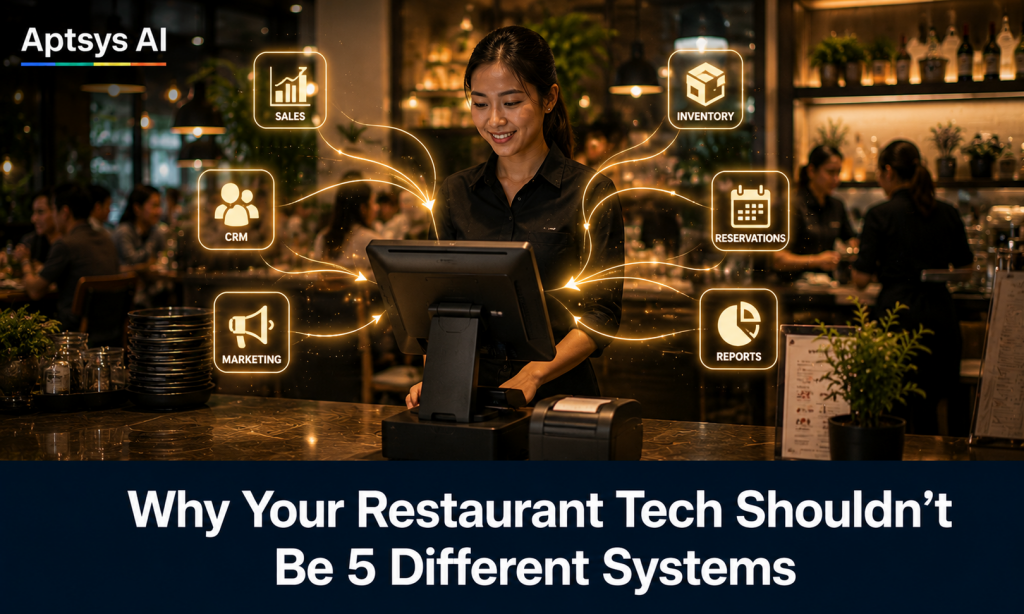
Walk into most Singapore F&B back offices and you’ll find the same pattern: one system for the POS, another for QR ordering, a third for CRM and loyalty, a fourth for the kitchen display, and sometimes a fifth just for reservations or delivery. Each tool does its job well enough on its own. The problem is what happens between them — or rather, what doesn’t happen at all.
Industry-wide, roughly 40% of restaurant operators are now running four to five separate operational systems, manually syncing guest data and availability between them. The overwhelming majority say better-connected systems would directly improve profitability. This isn’t a minor operational nuisance — it’s a structural cost most owners have simply learned to live with.
What Disconnected Systems Actually Cost You
Guest data gets trapped in silos. A customer orders via your QR platform, but that order never updates your CRM. Your loyalty programme doesn’t know they visited. Your POS has no record of their preferences. Every touchpoint starts from zero.
Staff become the integration layer. When systems don’t talk to each other, a person has to — re-entering orders, manually checking a diner’s membership status, cross-referencing the kitchen printer against what the app says was ordered. Every manual re-entry is a chance for an error, and every error costs time to fix.
Promotions and pricing drift out of sync. A discount configured in your CRM doesn’t automatically apply at the POS. A member price shown on the QR menu doesn’t match what the till charges. Guests notice these mismatches immediately, and they erode trust in the technology, not just the price.
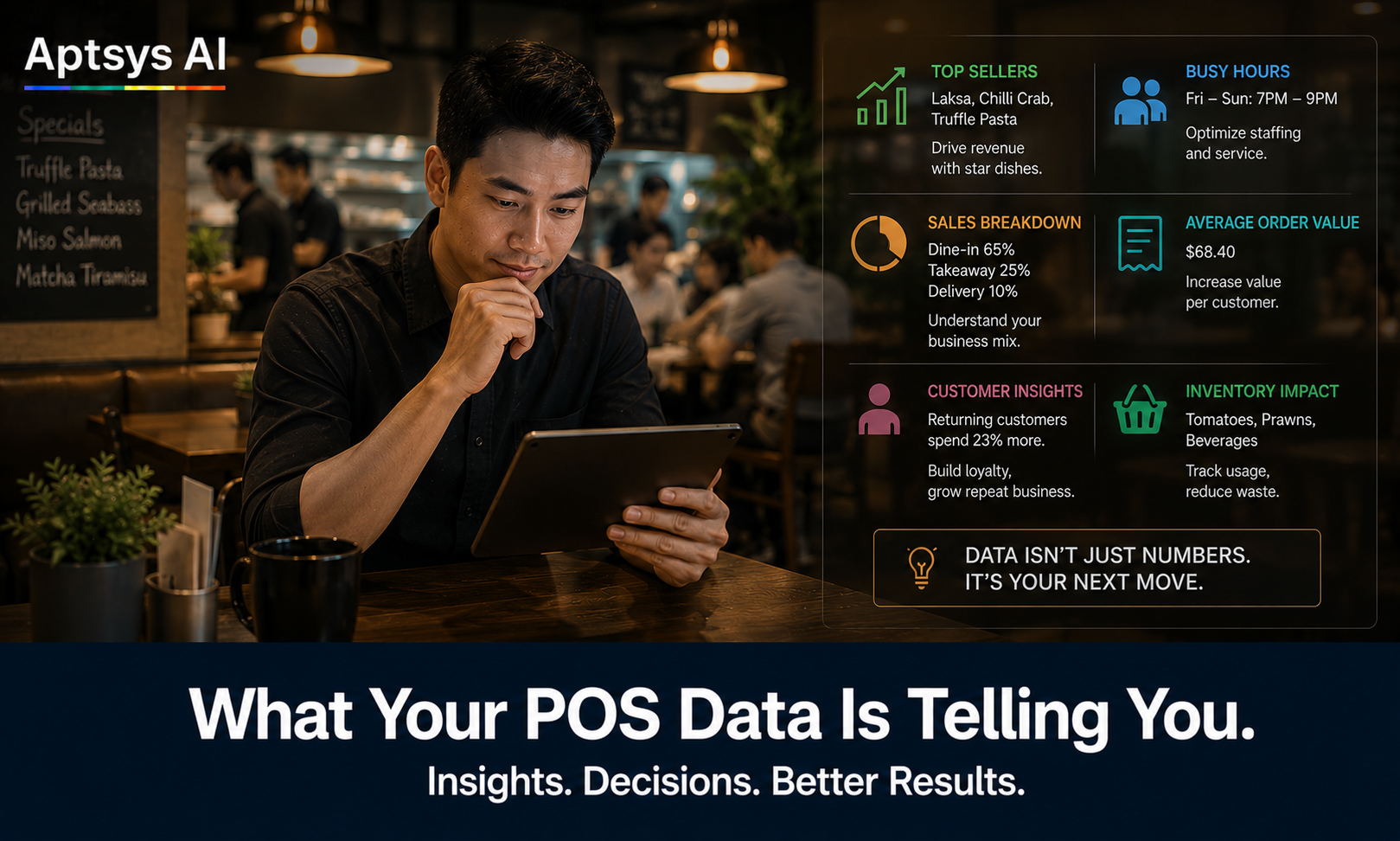
You lose the data that would tell you what’s working. Without one system tracking the full guest journey — order, payment, loyalty, repeat visit — you can’t easily answer basic questions: which promotions actually bring guests back, which menu items get modified most, which shifts have the highest order-error rate.
What a Connected System Looks Like in Practice
The alternative isn’t necessarily one giant piece of software that does everything adequately. It’s a POS, ordering, CRM, and kitchen display that are built to work as one system from the start, so that:
- An order placed via QR ordering appears on the kitchen display instantly, with no manual re-entry
- A member’s profile, past orders, and available vouchers show up automatically at checkout, whether they’re ordering via QR, kiosk, or counter
- A promotion configured once applies consistently everywhere a guest might see or redeem it
- Every transaction — from any channel — updates the same CRM record, building a single, accurate picture of each guest over time
The value isn’t just fewer errors. It’s that your data becomes usable. When every order, every guest interaction, and every payment flows into one connected system, you can actually see patterns — which items to promote, which guests are close to becoming regulars, which time slots need more attention — instead of guessing.
Why This Matters More as You Add Technology
The temptation for many restaurants is to solve one problem at a time: add a kiosk to speed up queues, add a CRM to run promotions, add QR ordering to cut labour. Each addition makes sense in isolation. But every new standalone system adds another silo, another manual sync point, and another place for guest data to get lost.
The restaurants pulling ahead aren’t necessarily the ones with the most technology — they’re the ones whose technology is connected enough that adding a new channel doesn’t create a new operational headache.
How Aptsys Approaches This
Aptsys’s Jade POS, iOrder QR ordering, CRM, loyalty, and kitchen display (Ruby) are built as one connected platform, not bolted-together point solutions:
- Every QR and kiosk order routes directly to Jade POS and the kitchen display with no manual entry
- CRM and loyalty data updates automatically on every transaction, across every channel
- Member pricing, vouchers, and promotions apply consistently wherever a guest orders
- One system means one accurate picture of your guests, your inventory, and your sales — not five partial ones
Getting Started
If your restaurant is running separate tools for POS, ordering, CRM, and kitchen operations, the cost isn’t always visible day to day — but it shows up in wasted staff time, mismatched pricing, and guest data you can’t actually use.
See how Aptsys connects your entire F&B operation, or book a free demo to see it running as one system.