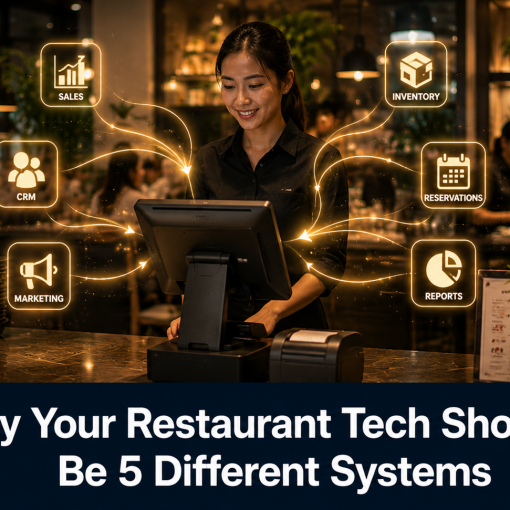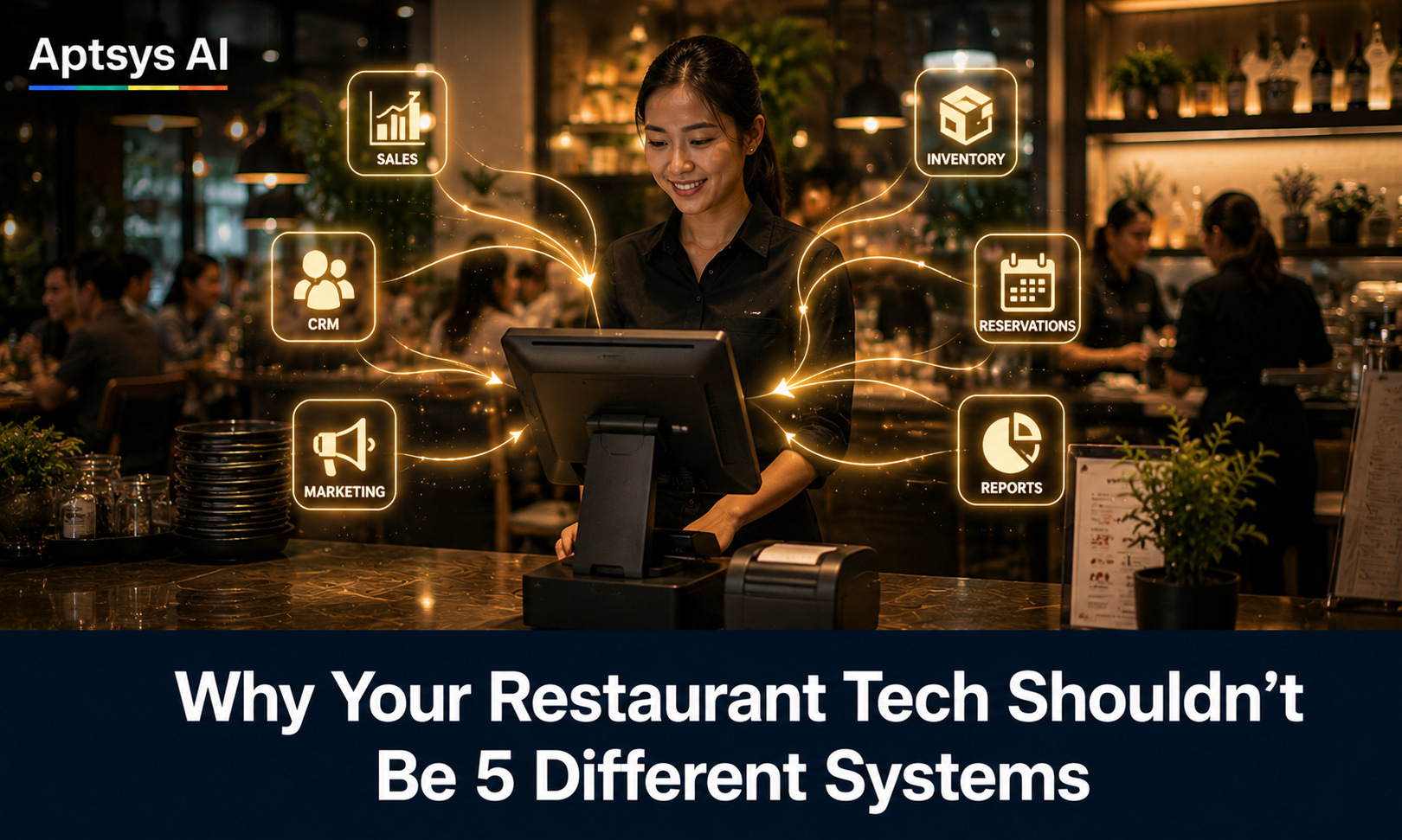
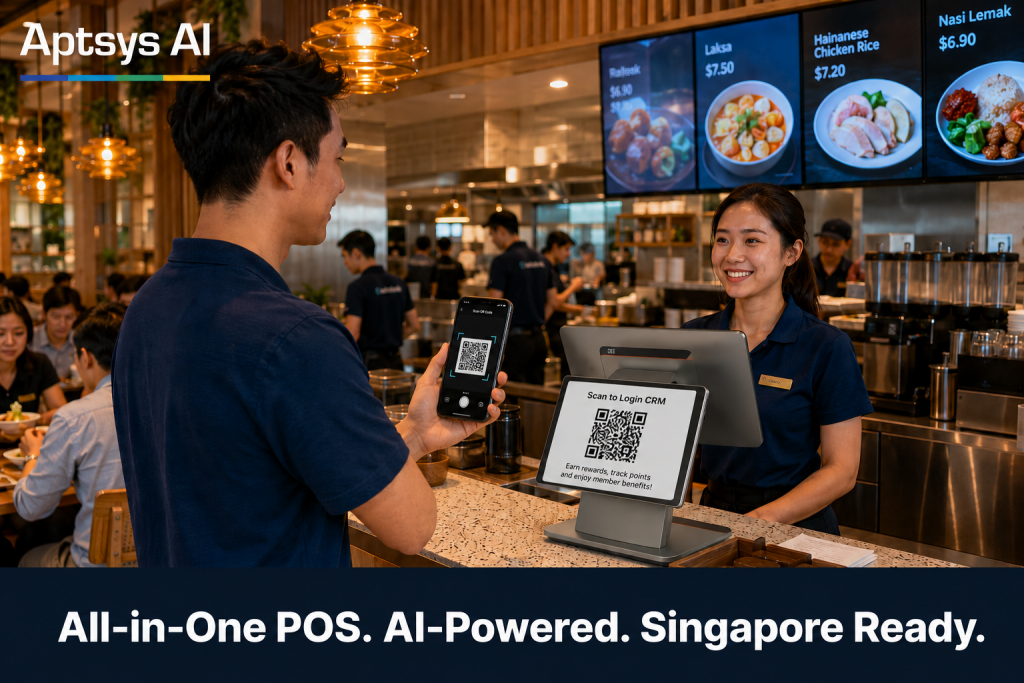
Most Singapore restaurants are still running POS systems built before QR ordering existed, before AI upselling was possible, and before smart inventory could automatically 86 an out-of-stock set meal the moment its key ingredient runs out. In 2026, the gap between an outdated POS and the right one isn’t just operational — it shows up directly in your revenue and your margins.
Choosing a POS system is one of the most important technology decisions a Singapore restaurant owner will make. Get it right and it becomes the operational backbone of your business — connecting orders, payments, inventory, staff management, and customer data in one place. Get it wrong and you are locked into a system that slows your team down, generates unreliable data, and costs more to fix than it saves.
This guide covers what to look for in an F&B POS system for Singapore restaurants in 2026, how the leading options compare, and which solution is right for your type of operation.
What Makes a Good F&B POS System for Singapore?
Singapore’s F&B environment is unique — fast-moving, operationally demanding, and shaped by specific local requirements that international POS systems often do not handle well.
A POS system built for Singapore restaurants should cover:
- GST compliance — accurate GST calculation and reporting as required by IRAS
- Local payment methods — PayNow, SGQR, NETS, major credit cards, and e-wallets (GrabPay, PayLah, FavePay)
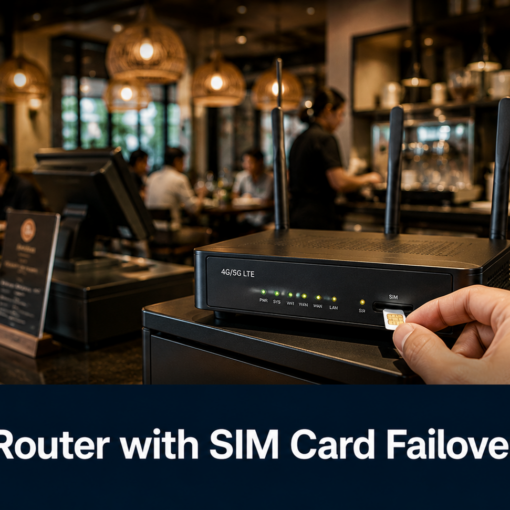
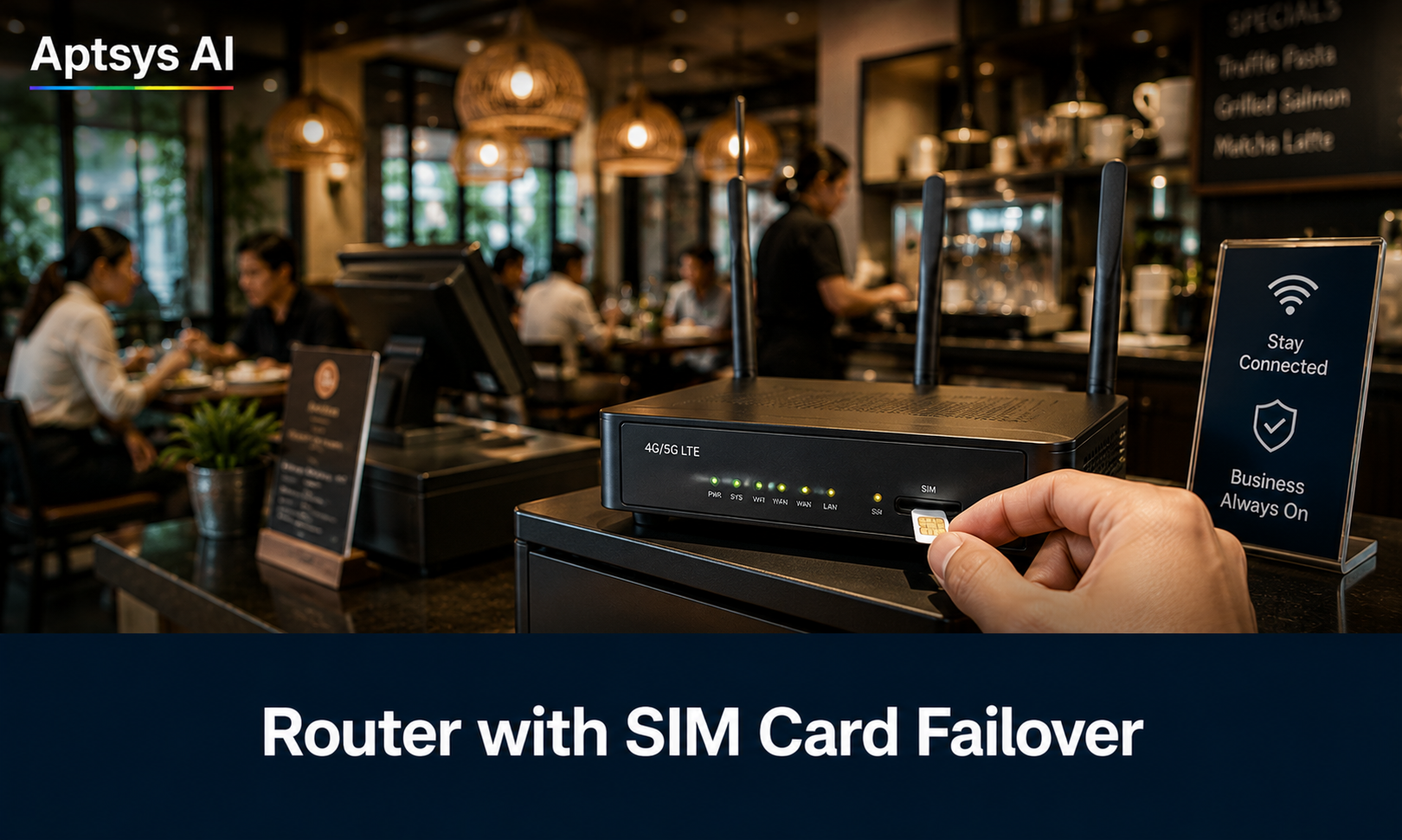
- Offline capability — continues operating during internet outages, syncs automatically when connection is restored
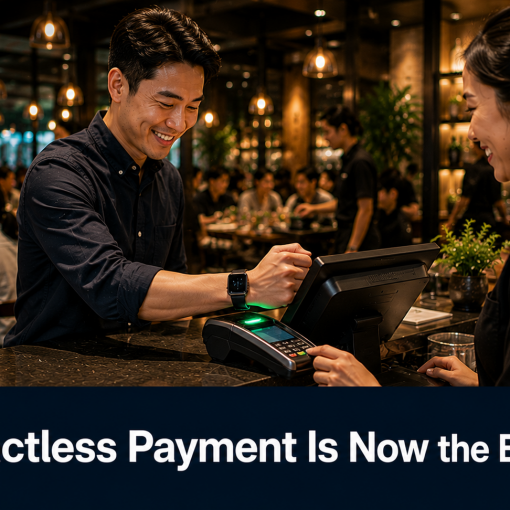
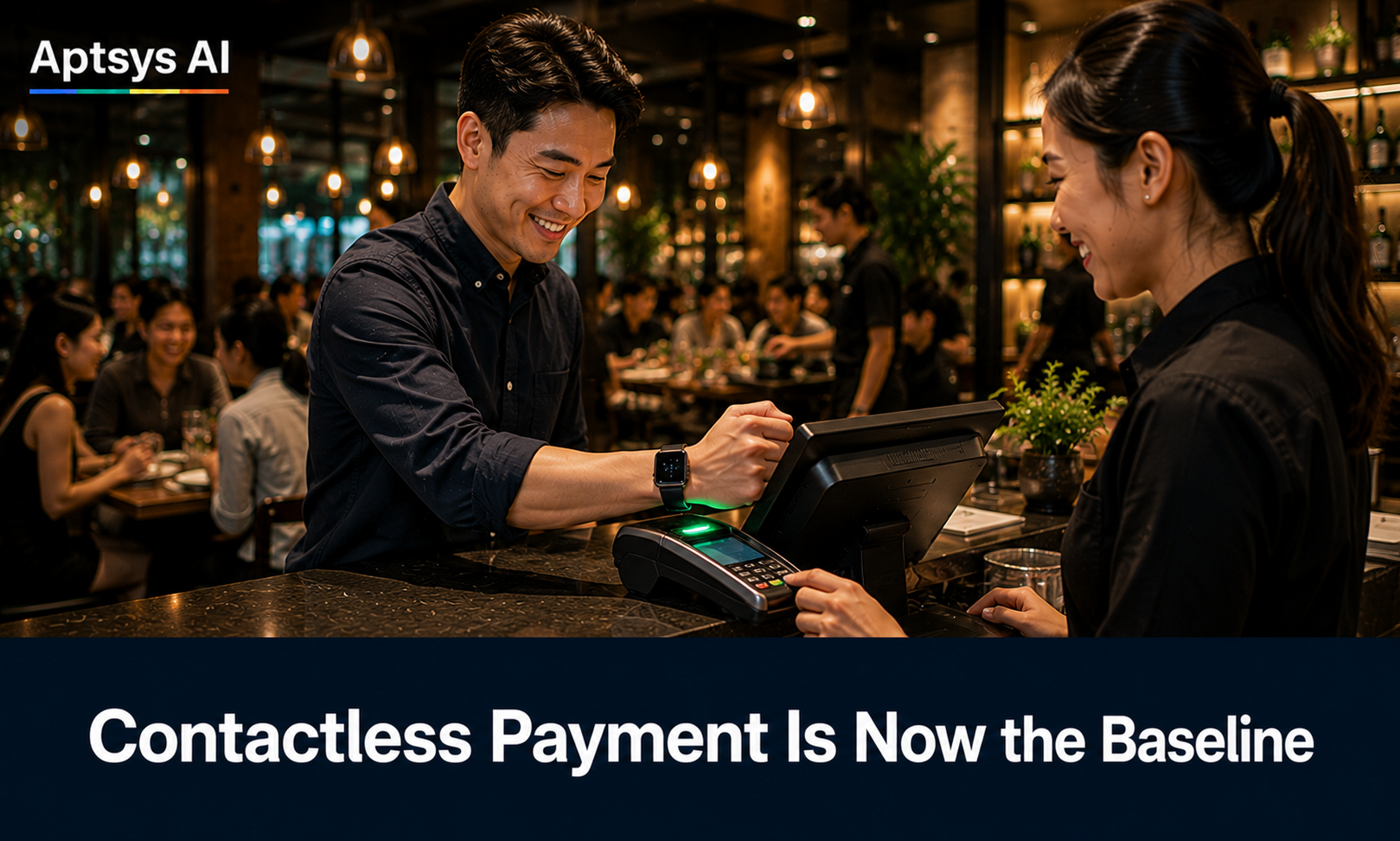
- Payment terminal integration — amount flows directly from POS to payment terminal, no manual keying
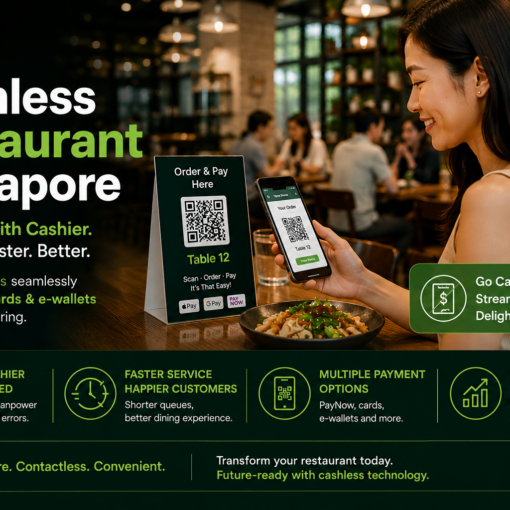
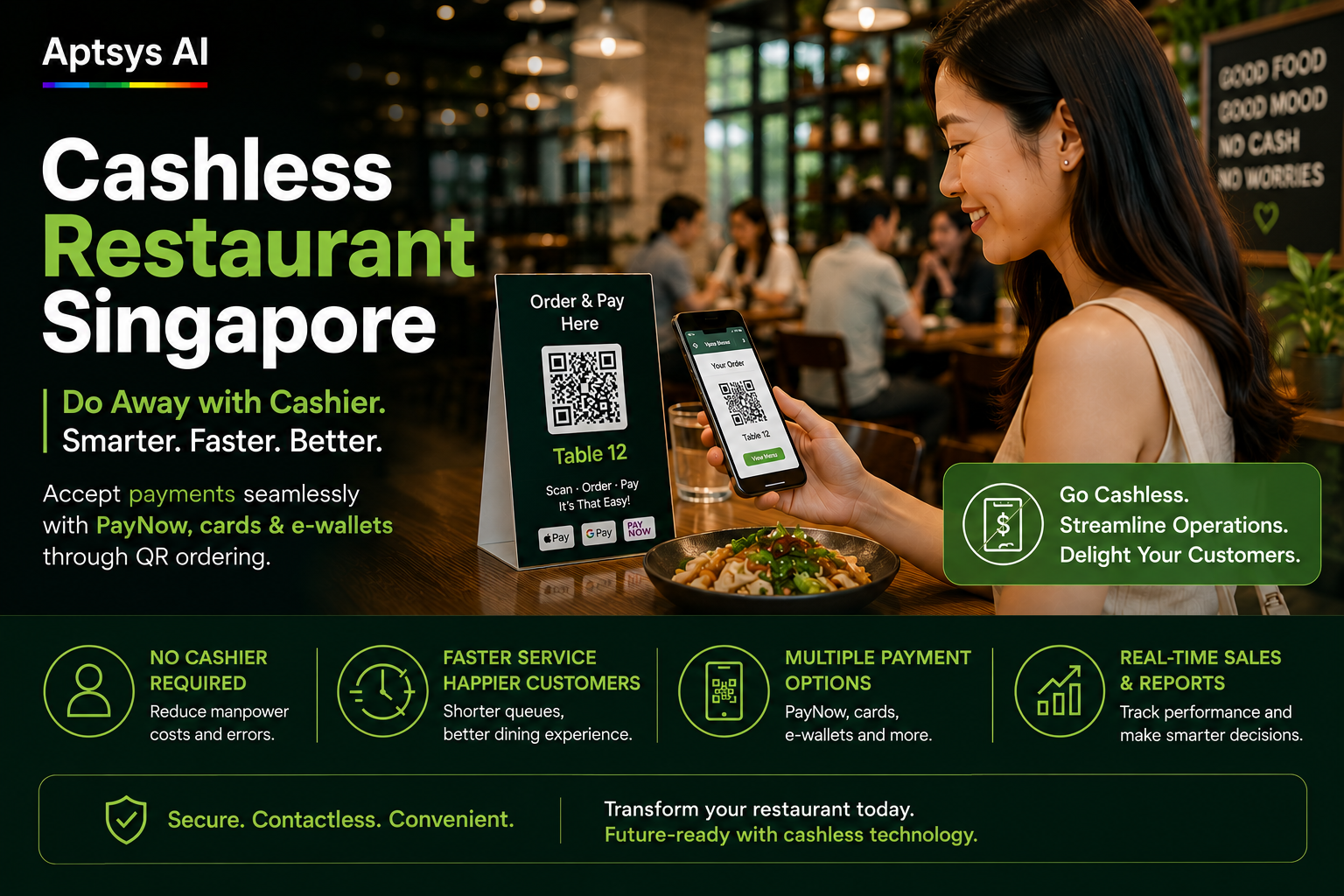
- QR self-ordering — table ordering via QR code is now mainstream across Singapore F&B
- Kitchen Display System (KDS) — replaces paper tickets with a digital kitchen order display
- Smart inventory management — real-time stock tracking that automatically updates menu availability
- CRM and loyalty — customer data capture and points management integrated with the POS
- Cloud-based reporting — access your sales data from any device, anywhere
- Local support — a Singapore-based support team that understands your operating environment
The Singapore F&B POS Landscape in 2026
The market has matured significantly. The key players serving Singapore restaurants in 2026 fall into distinct categories based on the type of operation they serve best.
Jade POS by Aptsys — Best for Integrated F&B Operations
Best for: Casual dining, fine dining, multi-outlet restaurant groups, and operators who want AI-powered ordering, smart inventory, and member pricing tightly integrated with their POS.
Jade POS is a Singapore-built cloud POS system designed specifically for the F&B sector. Unlike international platforms that retrofit local payment methods, Jade POS is built from the ground up for Singapore’s operating environment.
Key strengths:
Offline Mode — Jade POS continues to operate fully during internet outages. Transactions are processed normally and data syncs automatically when the connection is restored. For a restaurant mid-service, this is the difference between a minor inconvenience and a complete operational breakdown.
Payment Terminal Integration — the transaction amount flows directly from Jade POS to the payment terminal with no manual keying required. This eliminates one of the most common sources of cashier error in F&B — miskeyed payment amounts — and removes the end-of-day reconciliation headaches that come with human data entry mistakes.
AI Upselling — built directly into the POS ordering flow. When a customer orders, the system automatically suggests complementary items based on what they have ordered — increasing average transaction value without requiring staff intervention. Works as a standalone POS feature, with no dependency on QR ordering or kiosk.
AI Pair — intelligently recommends food and beverage pairings during the ordering process at the POS — enhancing the dining experience while naturally driving add-on orders. Works as a standalone POS feature.
Smart Inventory with Auto 86 — when a menu item runs out of stock, Jade POS automatically marks it as unavailable — and critically, also auto 86s any set meals where that item is a mandatory component. This prevents customers from ordering items the kitchen cannot fulfil, eliminates mid-service confusion, and removes the need for staff to manually track stock dependencies across the menu.
Low Stock Alerts — when stock hits a defined threshold, automated alerts are sent via email to management and purchasing teams, and via kitchen docket to the kitchen — so both the front-line team and decision-makers are notified simultaneously through the channels most relevant to them.
Member Pricing — supports different price tiers for members versus non-members, applied automatically at the point of order across POS and QR ordering. Most Singapore POS systems handle loyalty points but not dynamic member pricing — this is a meaningful differentiator for restaurant groups running membership or VIP programmes.
Full integration with iOrder QR self-ordering — orders placed via QR go directly to the kitchen, loyalty points are awarded automatically, and every transaction updates the customer CRM profile in real time.
Built-in CRM and loyalty — every transaction is linked to a customer profile automatically, building a customer database that grows with every visit.
Real-time multi-outlet reporting — consolidated view across all locations from any device.
Ideal for: Restaurant operators who want a single integrated platform covering POS, QR ordering, kiosk, CRM, loyalty, AI upselling, smart inventory, offline capability, and direct payment terminal integration — rather than stitching together multiple systems from different vendors.
Eats365 — Who Typically Uses It
Common users: F&B franchises, multi-brand groups, and large restaurant chains with complex workflows.
Eats365 is a Hong Kong-founded system with global presence across 32 markets, offering a modular architecture with more than 500 functions and dynamic floor plan management. It is designed to scale from a growing local brand to a global enterprise.
Consideration: Built for scale and complexity. For independent restaurants or smaller groups, the feature depth can exceed what is needed — and pricing reflects the enterprise positioning. AI-powered upselling, smart auto 86, and member pricing are not included.
Rewardly — Who Typically Uses It
Common users: Retail-adjacent F&B operators, hawker groups, and businesses where loyalty and payment integration are the primary requirements.
Rewardly is a homegrown Commerce, Loyalty, and Payment platform designed for local tax rules (GST), mall GTO submissions, and Singapore payment culture including PayNow, SGQR, cards, and e-wallets.
Consideration: Strong on loyalty and payments, but less depth on kitchen and table management, AI-powered features, offline capability, and smart inventory compared to Jade POS.
Qashier — Who Typically Uses It
Common users: Cafés, kiosks, food trucks, and single-location restaurants needing a simple, affordable entry-level solution.
Qashier offers smart terminals that are space-saving and all-in-one, with integrated payment support. Pricing starts with a free plan, with the Essential tier at S$56/month and the Growth tier at S$98/month.
Consideration: Great for simple operations, but limited on AI-powered features, offline capability, smart inventory depth, and multi-outlet management.
MEGAPOS — Who Typically Uses It
Common users: Quick-service restaurants, takeaway counters, and kiosk-heavy operations.
MEGAPOS is a well-established Singapore player with solid inventory management and staff scheduling features, particularly suited to high-volume quick-service operations.
Consideration: Less suited to full-service table dining where AI upselling, smart inventory, and deep CRM integration are priorities.
Side-by-Side Comparison
| Jade POS | Eats365 | Rewardly | Qashier | MEGAPOS | |
|---|---|---|---|---|---|
| Built for Singapore | ✅ | Partial | ✅ | ✅ | ✅ |
| Offline mode | ✅ | Limited | ❌ | Limited | Limited |
| Payment terminal integration | ✅ Direct | ✅ | ✅ | ✅ | ✅ |
| QR self-ordering | ✅ Native | ✅ | ✅ | Limited | Limited |
| AI Upselling | ✅ POS | ❌ | ❌ | ❌ | ❌ |
| AI Pair | ✅ POS | ❌ | ❌ | ❌ | ❌ |
| Smart Auto 86 + Set Meal | ✅ | Limited | Limited | ❌ | Limited |
| Low Stock Alerts | ✅ Email + Docket | Limited | ❌ | ❌ | Limited |
| Member Pricing | ✅ | ❌ | Limited | ❌ | ❌ |
| CRM + loyalty | ✅ Native | ✅ | ✅ Strong | ✅ Basic | ✅ Basic |
| Kitchen Display | ✅ | ✅ | ✅ | Limited | ✅ |
| Multi-outlet | ✅ | ✅ Strong | ✅ | Limited | ✅ |
| Typical users | Integrated AI operations | Large chains | Loyalty-first | Small outlets | Quick-service |
Note on PSG Grant: PSG co-funding of up to 50% applies to QR self-ordering and digital ordering solutions — not POS systems. This applies equally across all vendors. Check GoBusiness for the current list of pre-approved digital ordering solutions, or read our PSG Grant guide for Singapore restaurants.
How to Choose the Right POS for Your Singapore Restaurant
Step 1 — Match to your operation type
| Operation Type | Recommended |
|---|---|
| Independent casual dining | Jade POS |
| Fine dining | Jade POS |
| Multi-outlet restaurant group | Jade POS or Eats365 |
| Large franchise / chain | Eats365 |
| Café or kiosk | Qashier |
| Quick-service / takeaway | MEGAPOS or Qashier |
| Loyalty-first retail-adjacent F&B | Rewardly |
Step 2 — Test offline capability before you commit
Internet outages are a fact of life. Ask every vendor directly: what happens to my POS during an outage? Can I still take orders and process cash payments? Does it sync automatically when connection is restored? A system that goes down with the internet is a liability — not an asset.
Step 3 — Verify payment terminal integration
Manual keying of payment amounts between your POS and payment terminal is an unnecessary risk. Every manual entry is an opportunity for human error — miskeyed amounts, undercharges, and end-of-day reconciliation discrepancies. Ask vendors whether their POS integrates directly with the payment terminal so amounts flow automatically.
Step 4 — Look for AI-powered features
Most Singapore POS systems on the market today are built on technology from 5–10 years ago. The meaningful differentiator in 2026 is AI — specifically, whether the system can automatically increase revenue (upselling, pairing) and automatically prevent operational errors (smart inventory, auto 86) without requiring staff input.
Step 5 — Evaluate local support
A POS system failure during a Friday dinner service is a serious problem. Before committing to any platform, ask: Is there a Singapore-based support team? What is the response time for critical issues? Do they provide on-site support if needed?
Step 6 — Request a demo with your actual menu
Generic demos look impressive. Ask every vendor to set up a demo using your actual menu, including modifiers, set meals, and promotional pricing. This is the fastest way to test whether smart inventory, AI upselling, and member pricing work correctly for your specific setup.
Why Integrated Beats Best-of-Breed for Most Singapore Restaurants
A common approach is to pick the “best” POS, the “best” QR ordering app, and the “best” CRM as separate systems. On paper this sounds logical. In practice it creates three problems:
1. Data silos — customer data in your CRM does not automatically sync with your POS transaction data. You end up with an incomplete picture of each customer.
2. Integration costs — connecting separate systems requires custom development or expensive middleware. The “cheaper” option often ends up costing more.
3. Support complexity — when something goes wrong, each vendor blames the other. With an integrated platform, there is one vendor, one support contact, one system to troubleshoot.
For most Singapore restaurants — particularly those with 1–5 outlets — an integrated platform that covers POS, QR ordering, kiosk, CRM, loyalty, AI upselling, and smart inventory from a single vendor is simpler, more reliable, and more cost-effective than assembling a stack of best-of-breed tools.
Ready to See Jade POS in Action?
Book a 30-minute demo this week — we’ll configure Jade POS with your actual menu and walk you through AI upselling, smart inventory with auto 86, offline mode, and member pricing live. No commitment, no generic slides — just your menu, your operation, and the features that matter to you.
📞 +65 6457 7991 📧 sales.demo@aptsys.com.sg
Aptsys has been serving Singapore F&B operators since 2011. We work with independent restaurants, casual dining groups, fine dining establishments, and multi-outlet operators across Singapore.
Frequently Asked Questions
What is the best POS system for a small Singapore restaurant? For a small single-outlet restaurant, Qashier offers a low-cost entry point. For a restaurant that wants AI-powered upselling, smart inventory, offline capability, and integrated CRM from day one, Jade POS is the better long-term investment.
Does PSG grant cover POS systems in Singapore? No — PSG grant does not cover POS systems directly. PSG co-funding of up to 50% applies to QR self-ordering and digital ordering solutions, which applies equally to all vendors. Read our full PSG Grant guide for Singapore restaurants for details on eligible solutions, how to apply, and how to stack PSG with SFEC to maximise your subsidy.
What happens to Jade POS during an internet outage? Jade POS continues to operate fully during internet outages — transactions are processed normally and data syncs automatically when the connection is restored. Your service does not need to stop.
How does payment terminal integration reduce mistakes? When your POS integrates directly with your payment terminal, the transaction amount flows automatically — no staff member needs to manually key in the amount. This eliminates miskeyed payments, undercharges, and the reconciliation discrepancies they cause at end of day.
What makes Jade POS different from other Singapore POS systems? The key differentiators are AI Upselling and AI Pair built directly into the POS — increasing average transaction value and enhancing the dining experience at the point of order, with no dependency on QR ordering or kiosk; Smart Auto 86 that automatically removes affected set meals when an ingredient runs out; Member Pricing for different customer tiers; Low Stock Alerts via email and kitchen docket; full offline capability; and direct payment terminal integration. These features are not available together in any other Singapore F&B POS system.
Is Jade POS suitable for fine dining restaurants? Yes. Jade POS is used by established Singapore restaurant groups including fine dining and casual dining operators. Key features for fine dining include member pricing for VIP and regular members, AI Pair for food and beverage recommendations, integrated CRM that builds a guest profile with every visit, and direct payment terminal integration that eliminates manual keying errors during high-value transactions. Contact us to discuss your specific requirements.
How long does it take to implement a new POS system? For a single-outlet restaurant, implementation typically takes 1–2 weeks including hardware setup, menu configuration, and staff training. Multi-outlet implementations take longer depending on complexity.
Can I use Jade POS for a kiosk operation? Yes — Jade POS supports kiosk deployments via the Turquoise self-service kiosk. Note that AI Upselling and AI Pair are POS features — speak to us about how AI-driven recommendations can be incorporated into your kiosk workflow.
Aptsys Technology Solutions Pte Ltd provides F&B technology solutions for Singapore restaurants including Jade POS, iOrder QR self-ordering, kiosk ordering, and integrated CRM and loyalty systems. Established in Singapore since 2011.