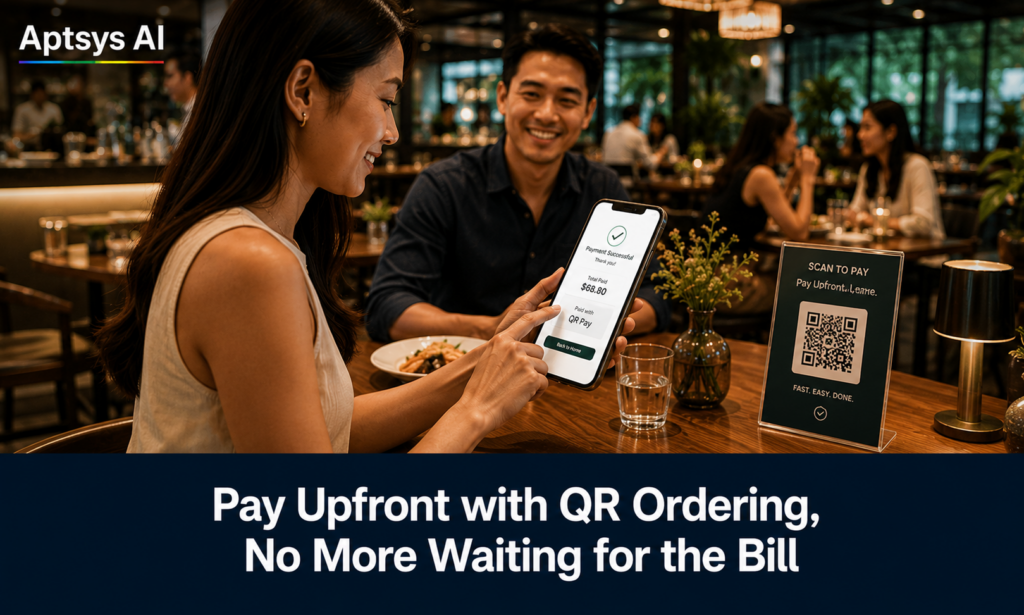
If you run a restaurant in Singapore and you use QR ordering, you already know the biggest benefit: fewer orders go wrong, and your staff spend less time running between tables. But there is a second advantage most operators do not fully use — pay upfront with QR ordering so your guests never have to wait for the bill. That one change can shave 10 to 20 minutes off every table’s total time in your restaurant. Over a dinner service, that can mean one extra seating.
Why Waiting for the Bill Is Costing You Money
The end-of-meal wait is one of the most frustrating parts of dining out in Singapore. Guests are done eating, ready to leave, but they are stuck. They try to flag someone down. A staff member is busy at another table. Five minutes pass. Then ten. By the time the bill finally arrives, the good impression the kitchen built has already faded.
For you, this wait has a direct cost. Every minute a table sits idle after guests finish eating is a minute that table could be turning. A table that clears in 60 minutes instead of 80 minutes during dinner service is the difference between three seatings and two. If your average spend is $50 per head and you seat four people per table, that is $200 of additional revenue per table per service — without adding seats, raising prices, or hiring anyone new.
How Pay Upfront Works with QR Ordering in Singapore Restaurants
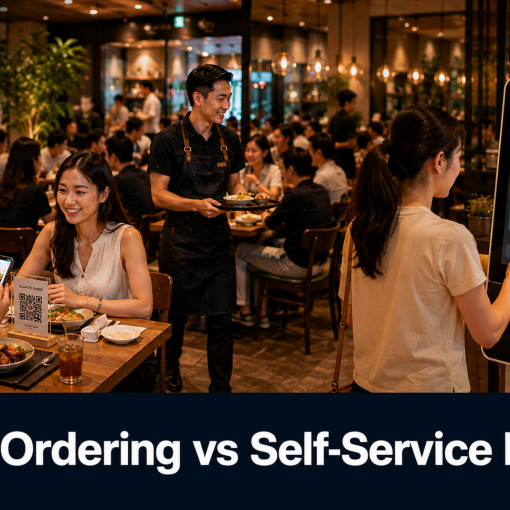
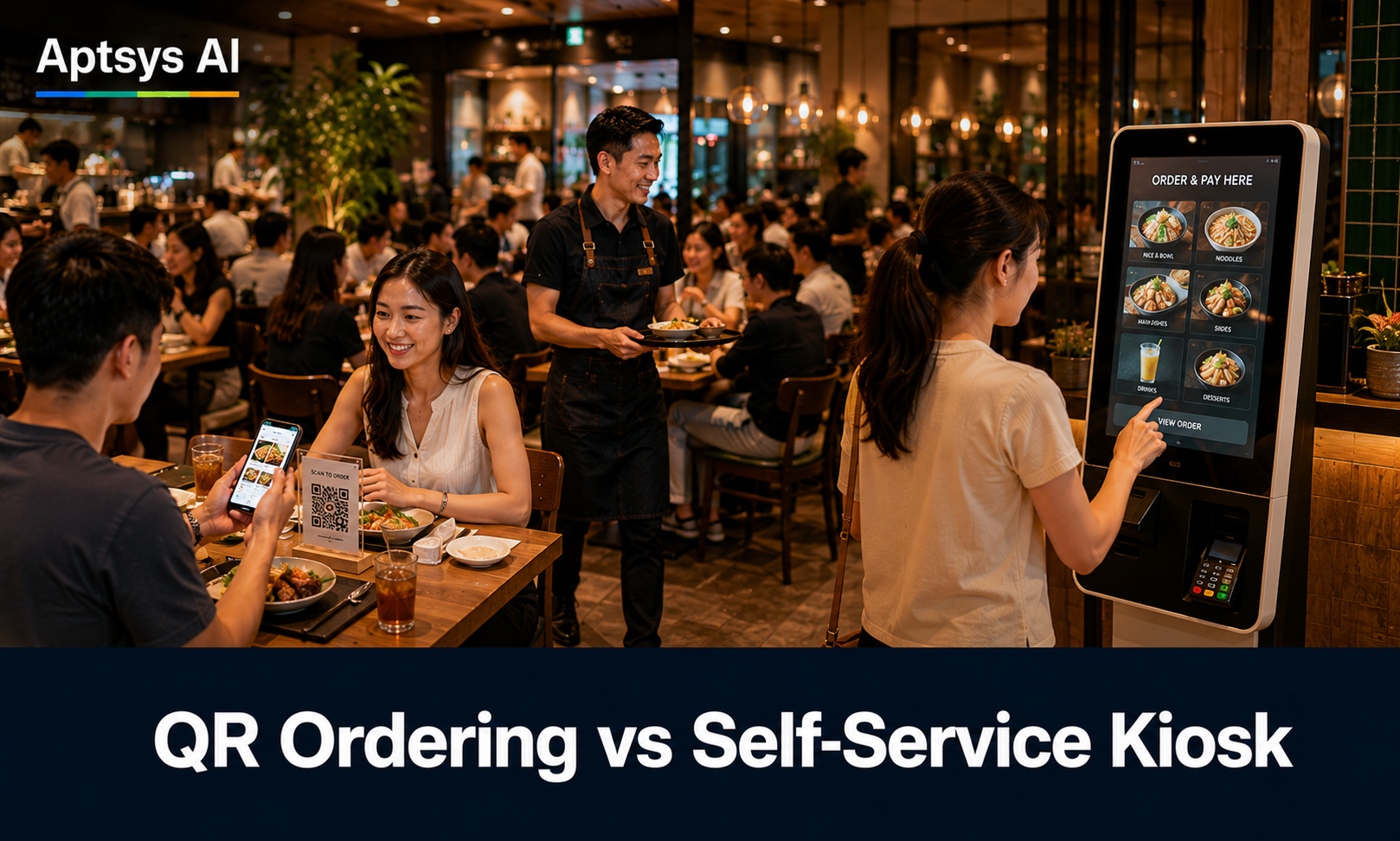
With a QR ordering system that includes pay-at-table, the guest scans the QR code, browses the menu, orders, and pays — all from their own phone, before or as they eat. No flagging down staff. No card machine brought to the table. No split-bill argument at the counter.
Payment goes through PayNow, credit card, or e-wallet — whichever your guests prefer. The receipt is digital. When they are ready to leave, they just leave. There is nothing for your staff to process and nothing for guests to wait for.
For groups with separate bills, the system handles split payments automatically. Each diner pays for what they ordered. This alone removes one of the most awkward and time-consuming interactions in the entire dining experience.
“But Won’t Guests Feel Rushed?”
This is the most common concern Singapore restaurant owners raise, and it is worth addressing directly. Paying upfront does not mean guests are shown the door. It means the payment step is decoupled from the departure. Guests can pay when the food arrives, partway through the meal, or when they are ready to go. The table stays theirs until they choose to leave.
Most guests find this more comfortable, not less. They are not sitting around waiting for something to happen. They have control. They leave on their own terms — they just happen to leave faster, because there is nothing left to wait for.
What Your Staff Do Instead
When your staff are not running card machines and reconciling split bills, they are doing things that actually require a person: checking in on tables, refilling drinks, handling special requests, and turning tables efficiently when guests leave. The quality of service goes up because your team is focused on hospitality, not transaction processing.
For restaurants operating with lean teams — which in Singapore’s labour market means almost everyone — this matters. You are getting more out of the people you have.
QR Ordering Pay Upfront Is Already Familiar to Singapore Diners
Hawker centres, food courts, and quick-service concepts in Singapore have operated on a pay-first model for years. Customers are completely comfortable with it. What is new is seeing this model applied cleanly in sit-down restaurants — where the QR code handles the full ordering-to-payment flow without any friction or separate device.
The restaurants that have made the switch report two consistent outcomes: faster table turnover and cleaner end-of-night reconciliation. When every transaction is digital and logged at the point of ordering, the numbers match. There is no cash shortfall, no forgotten table, no he-said-she-said about what was ordered.
Ready to Remove the End-of-Meal Bottleneck?
If your restaurant is already on QR ordering but guests are still waiting at the end of the meal, the integrated payment feature is the missing piece. If you are not yet on QR ordering, the full system — order, pay, done — is what to aim for from the start.
Aptsys QR ordering includes integrated payment as standard: PayNow, NETS, Visa, Mastercard, and major e-wallets. Guests order and pay from the same screen. No separate terminal, no extra step, no waiting.
See how it works: https://aptsys.com.sg/aptsys-solutions/qr-ordering/