QR Ordering for Singapore Restaurants: Why Branding Matters More Than You Think
Every Singapore restaurant owner understands the importance of a well-designed interior, a carefully crafted menu, and a consistent staff uniform. These are the visible expressions of your brand — the signals that tell customers who you are and why they should return.
But there is one customer touchpoint that most Singapore restaurants have handed over to someone else entirely: the ordering experience itself.
QR Ordering Is Now Universal — But Most Implementations Look the Same
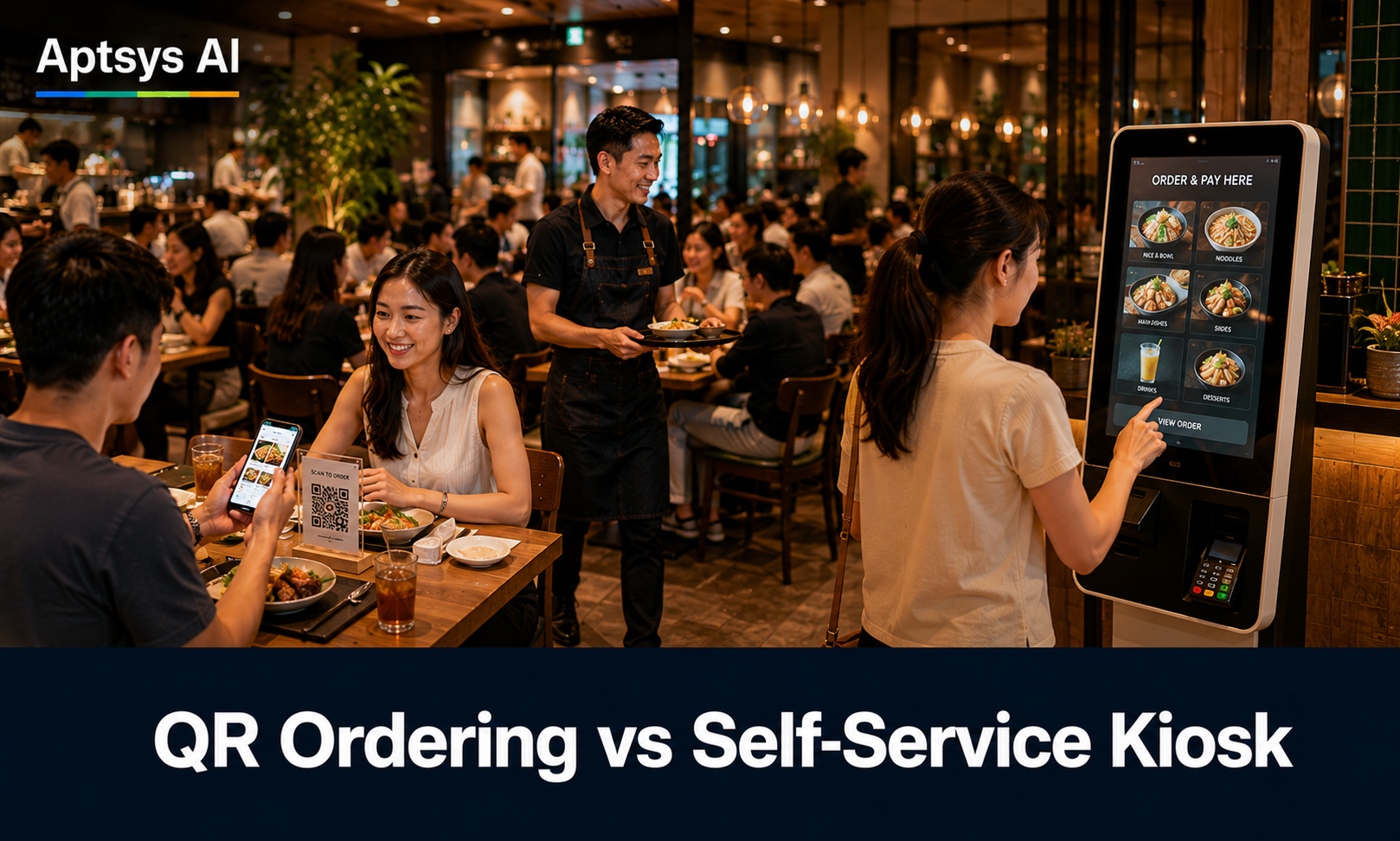
Walk into almost any Singapore casual dining restaurant today and you will find a QR code on the table. Scan it, and you are taken to an ordering interface. In many cases, that interface looks identical to the one at the restaurant next door — because it is built on the same third-party platform, using the same template, with the same generic design.
The menu items are different. The logo might be in the corner. But the experience — the colours, the layout, the fonts, the ordering flow — belongs to the platform, not the restaurant.
This is a missed opportunity. Not a cosmetic one. A commercial one.
Your Ordering Interface Is a Brand Touchpoint
The moment a customer scans your QR code, they are in your restaurant’s digital environment. This is a direct interaction between your brand and your guest — one that happens on average two to three times during a single dining experience (browsing the menu, placing an order, and paying).
A branded ordering experience communicates the same things as your physical environment: your personality, your values, your attention to detail. A generic ordering interface communicates the opposite — that the digital experience was not worth investing in.
For higher-end casual dining and fine dining restaurants, this inconsistency is particularly noticeable. A thoughtfully designed physical space paired with a generic white-label ordering interface sends a mixed signal about the quality of the experience.
The Data Ownership Problem
Branding is only one dimension of the issue. The other is data.
When customers order through a third-party QR platform, their data — order history, preferences, visit frequency — belongs to that platform. The restaurant processes the order. The platform owns the relationship.
This means that when you want to run a loyalty programme, a re-engagement campaign, or a personalised birthday offer, you are working with data you do not own. You are dependent on the platform’s tools, the platform’s terms, and the platform’s pricing.
A restaurant that owns its ordering interface owns its customer data. Every order placed through your branded QR ordering system updates your CRM with the customer’s preferences and visit history — data that belongs to you and can be activated without a third party in the middle.
What Branded QR Ordering Looks Like in Practice
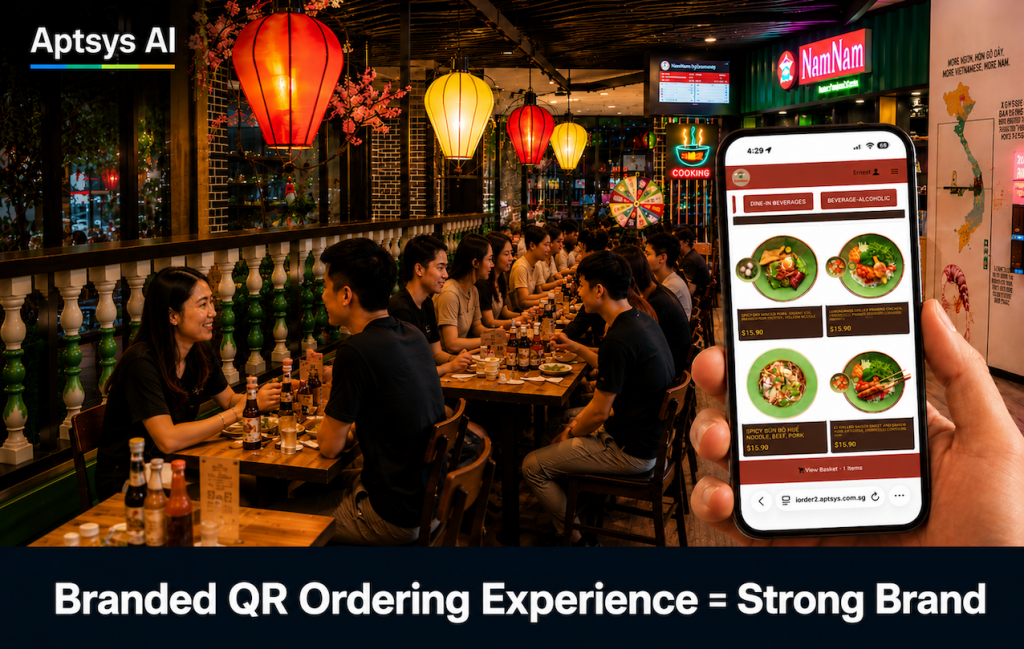
Aptsys’s iOrder QR self-ordering platform is built to be fully branded to your restaurant. Your colours, your fonts, your imagery, your tone of voice. The customer experience from QR scan to payment confirmation is consistent with your physical brand — not a generic template.
Under the hood, every order integrates directly with:
- Jade POS — orders go straight to the kitchen with no manual entry
- Kitchen Display System (Ruby) — kitchen team sees orders in real time
- CRM — every order updates the customer’s profile automatically
- Loyalty — points are awarded on every order without staff involvement
- AI Upselling — contextually relevant suggestions increase average transaction value
The Practical Impact
Higher average transaction value — AI-powered suggestions within the ordering flow increase what customers spend, on average, on each visit.
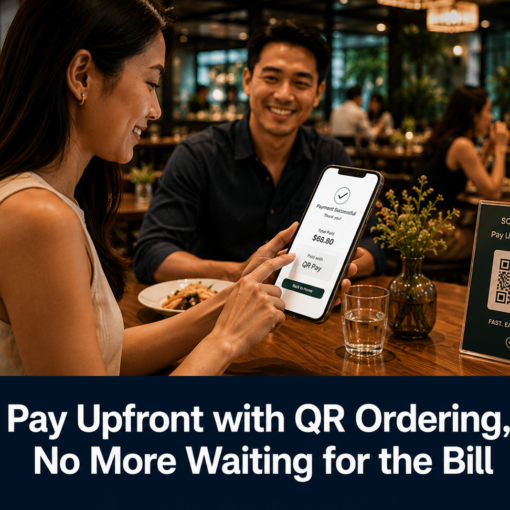
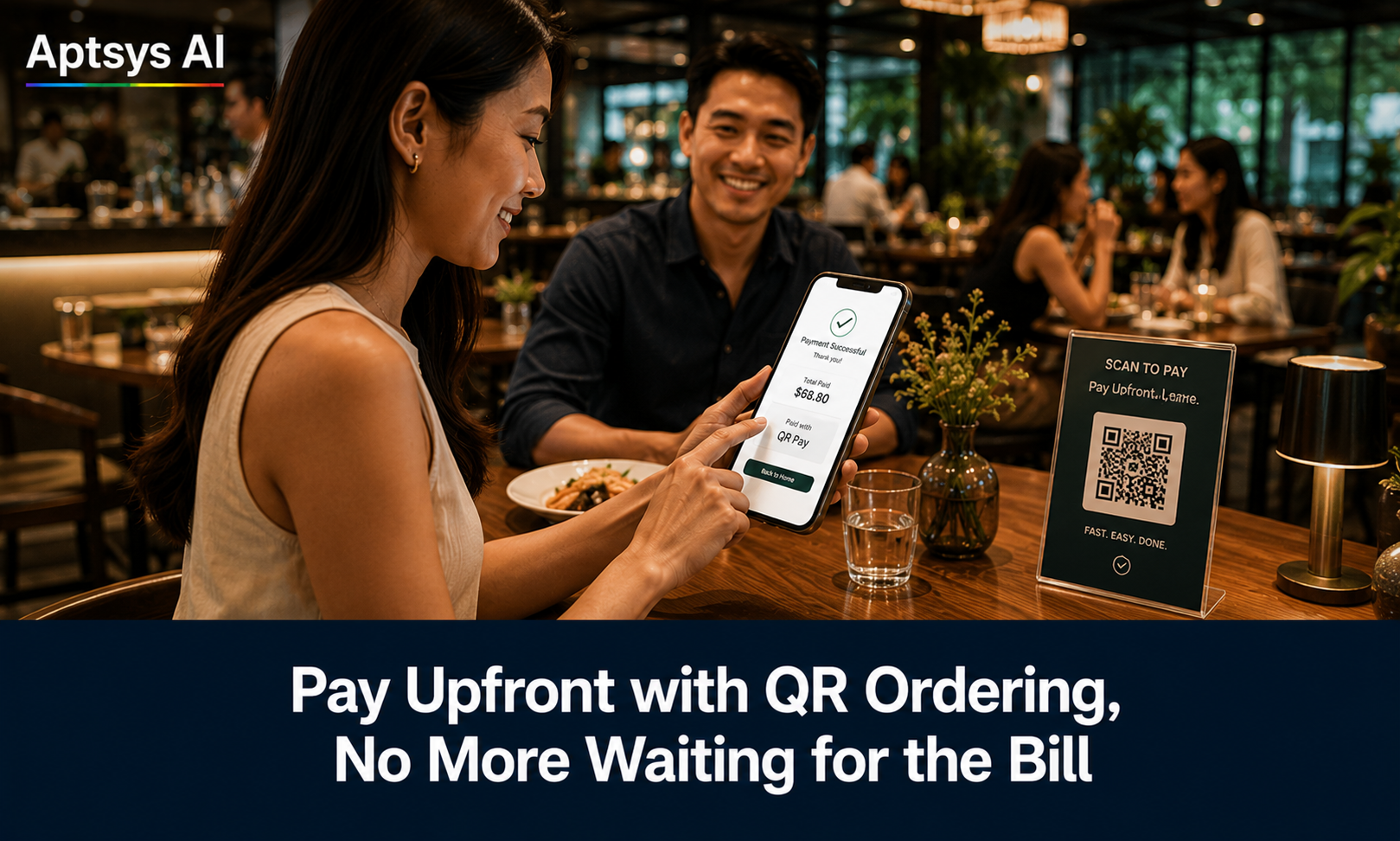
Faster table turns — customers order at their own pace, pay digitally, and do not need to wait for a server to bring the bill. Table turn time decreases.
Growing customer database — every customer who orders via QR is captured in your CRM, building a first-party database that grows with every cover.
Brand consistency — the ordering experience reinforces your restaurant’s identity rather than diluting it.
A Note on PSG Grant
Singapore SMEs can receive up to 50% co-funding under the Productivity Solutions Grant (PSG) for approved digital ordering solutions. Aptsys’s iOrder QR self-ordering is a pre-approved solution under the IMDA SMEs Go Digital programme.
Read the full PSG grant guide for eligibility criteria and application steps.
Getting Started
Book a free demo to see iOrder QR self-ordering customised to your restaurant’s branding.
Aptsys Technology Solutions Pte Ltd has been helping Singapore F&B businesses build better guest experiences with technology since 2011.